
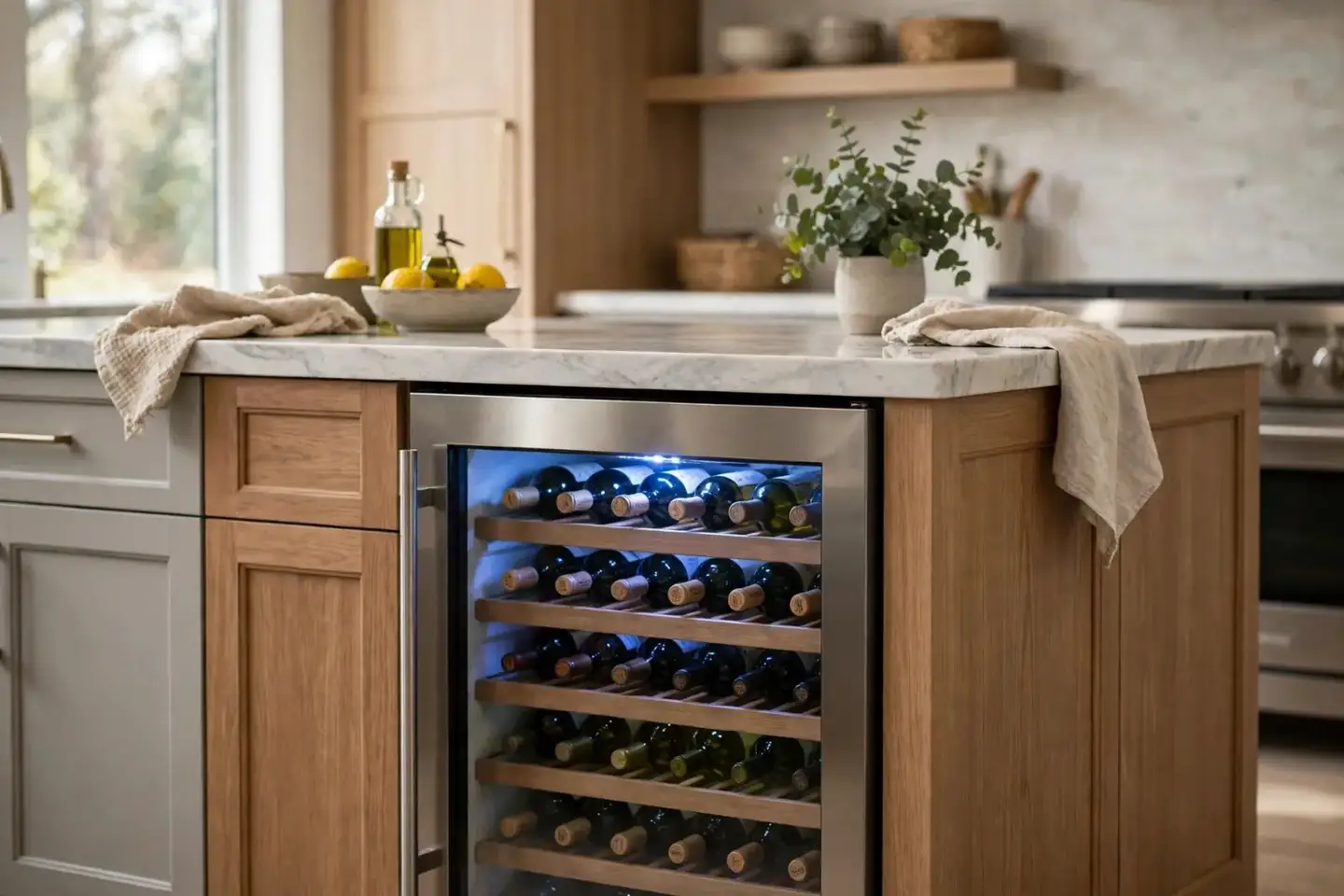
Undercounter refrigeration
Wine cooler and beverage fridge repair
Wine coolers come in two kinds. Compressor units work like a small refrigerator and can be repaired much the same way. Thermoelectric units use a solid-state module and a fan, are sensitive to room temperature, and are often replaced rather than repaired.
Calls answered 24 hours a day, 7 days a week. Calls are routed to an independent appliance repair technician. Reviewed .
Compressor or thermoelectric?
The rating plate or manual says which type you have. Compressor units cool well in warm rooms and are repairable. Thermoelectric units are quiet but can only cool a limited amount below room temperature.
- Compressor units
- Fans, thermostat or control, start relay and sealed system, as in a refrigerator.
- Thermoelectric units
- Peltier module, internal and external fans and the power supply.
- Undercounter installs
- Need front ventilation. A unit built for freestanding use overheats under a counter.
What changes the repair
- Built-in units
- Must be slid out of the cabinet opening.
- Parts
- Many smaller brands have limited parts support, which is worth checking first.
Parts replaced most
- Fans
- Small fans run constantly and wear out.
- Thermoelectric module and power supply
- The heart of a thermoelectric unit.
- Control board and sensors
- Cause wrong readings or erratic cycling.
How the repair runs
Identify the type
The technician confirms compressor or thermoelectric from the rating plate.
Test fans and controls
These fail most and are checked first.
Advise on next steps
If the main module or compressor has failed, you get an honest view of repair against replacement.
Checks before you call
Clear the vents
Front grilles on undercounter units must not be blocked by a kick plate or rug.
Check the room
Thermoelectric units struggle in hot rooms and garages.
Test the door seal
Use the paper test along the gasket.
Wine cooler symptoms
| What you notice | Usual cause | Usual fix |
|---|---|---|
| Warm and the fan is silent | Fan motor or power supply failed | Fan or supply replaced |
| Cannot get cold enough in summer | Thermoelectric limits, or blocked ventilation | Better ventilation or a compressor model |
| Ice on the back wall | Door gasket or defrost problem | Gasket replaced, defrost checked |
| Display shows the wrong temperature | Sensor fault | Sensor replaced |
Is it urgent?
- This week
Valuable wine and the cabinet is warming fast
Move bottles to a cool, dark place and book a visit.
- Plan it
Thermoelectric unit with a failed module
Compare repair with replacement.
Wine Cooler and Beverage Fridge Repair: common questions
What temperature should a wine cooler be?
Wine is commonly stored around 55 °F. Serving temperatures vary by wine. Check what your unit is designed for.
Can I put a freestanding wine cooler under a counter?
Only if the manual says it is front-venting or built-in rated. Otherwise it traps heat and fails early.
Why does my wine cooler run all the time?
Blocked ventilation, a warm room or a worn gasket. Thermoelectric units also run constantly by design.
Is it normal for a wine cooler to be warmer than set?
Small swings are normal, especially in thermoelectric units. A steady gap of several degrees, or a cabinet that keeps rising, points to a fan, seal or cooling fault.
How do I know if my wine cooler is compressor or thermoelectric?
The manual or rating plate says. Compressor units usually make a low hum and cycle on and off; thermoelectric units are nearly silent and have fans running constantly.
Talk to a technician about wine cooler and beverage fridge repair
Call to be connected with an independent appliance repair technician near you.
(800) 555-0199Calls answered 24 hours a day, 7 days a week
Fixwell Appliance Repair is a referral service. Your call goes to an independent appliance repair technician who sets their own schedule. Ask about insurance and the repair warranty before work starts. How this works
Call now · 24/7
Talk to a technician by phone
Call Now (800) 555-0199Have this ready when you call
- Your ZIP code
- The appliance, brand and model number
- What is happening, any error code, and whether water or gas is involved
Gas smell, smoke or flames: leave and call 911 or the gas utility first.