
Smell gas, see smoke or flames? Leave the building and call 911 or your gas utility from outside before anything else.
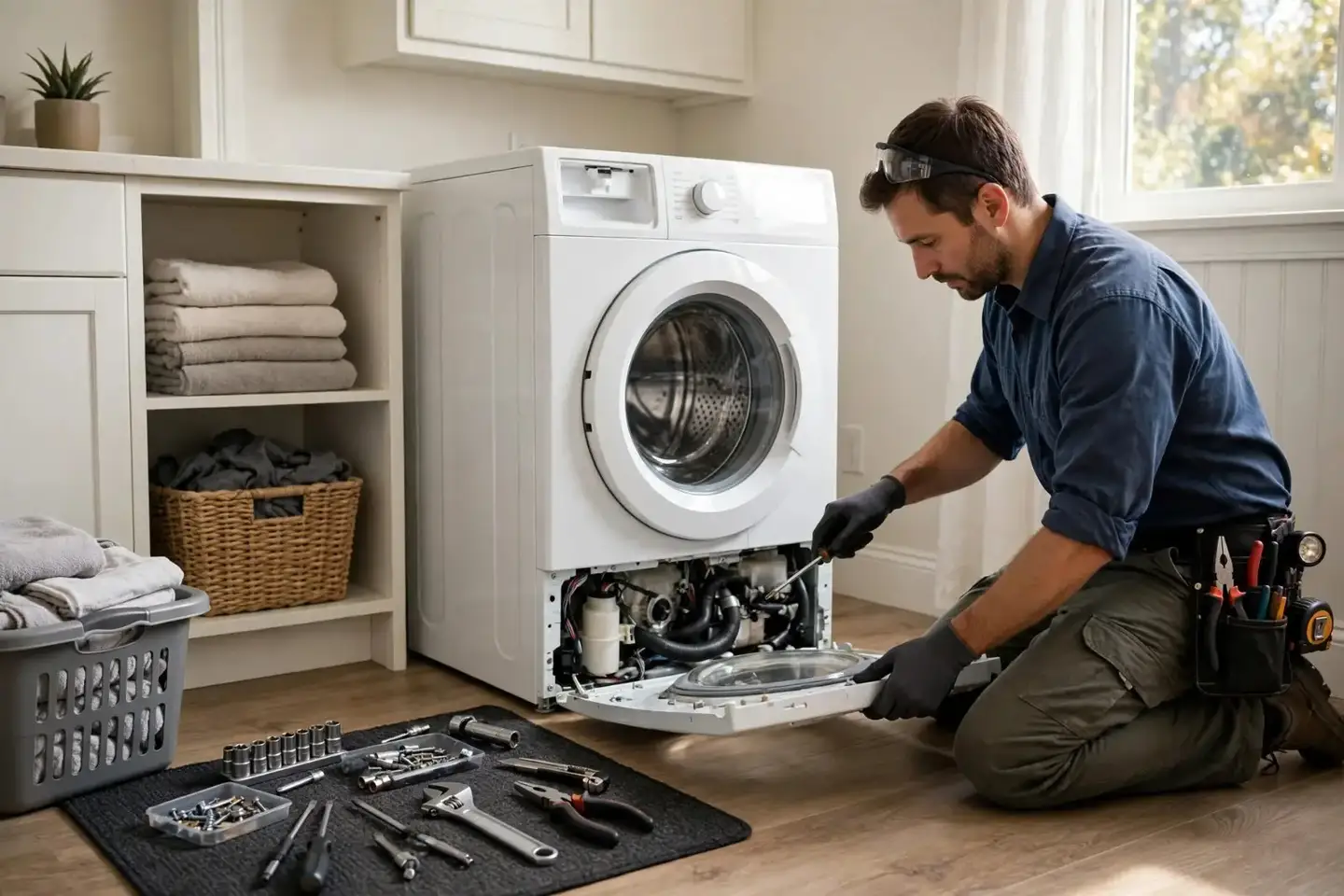
Laundry appliance repair
Washing machine repair
Most washer calls are drain and spin problems, and most of those start with something small: a sock in the drain pump filter, a kinked hose, an unbalanced load or a lid switch. Leaks are the calls that cannot wait, because a washer moves a lot of water quickly.
Calls answered 24 hours a day, 7 days a week. Calls are routed to an independent appliance repair technician. Reviewed .
How the technician works through it
Error codes and test mode
Most modern washers store fault codes and have a service test that runs each part.
Drain and fill
Pump, filter and valves are checked first, because they cause most complaints.
Drive and suspension
Belt, motor, bearings and shocks are checked for spin and noise complaints.
Test run
A rinse and spin cycle confirms the repair before the panels go back on.
What changes a washer repair
- Machine type
- Front-loaders take longer to open than most top-loaders.
- Stacked units
- A dryer stacked on top may need lifting off to reach the washer.
- Bearings and tubs
- Bearing jobs mean taking the tub apart and are the largest washer repair.
What a washer repair covers
A washer fills through inlet valves, agitates or tumbles with a motor, drains with a pump, and spins once a lid or door lock confirms it is closed. The technician checks those stages in order against the symptom.
- Fill
- Hot and cold inlet valves, the inlet screens and the pressure or level sensor.
- Drain
- Drain pump and its filter, the drain hose and the standpipe it empties into.
- Spin and drive
- Motor, drive belt or direct-drive coupling, clutch, and on front-loaders the drum bearings and shock absorbers.
- Door and lid
- Lid switch or door lock, which must confirm the machine is closed before it will spin.
Washer symptoms and what usually causes them
| What you notice | Usual cause | Usual fix |
|---|---|---|
| Water left in the drum | Clogged pump filter, kinked hose, failed drain pump | Filter cleared or pump replaced. See washer not draining. |
| Drains but will not spin | Lid switch or door lock, drive belt, unbalanced load | Switch or lock replaced, belt replaced |
| Loud banging during spin | Unbalanced load, worn shock absorbers or suspension rods | Load redistributed; suspension parts replaced |
| Grinding or roaring in spin | Worn drum bearings, mostly front-loaders | Bearings and seal replaced, or replacement weighed |
| Water on the floor | Inlet hose, door boot gasket, pump or tub seal | Leak point found and part replaced. See washer leaking. |
| Fills slowly or not at all | Clogged inlet screens, low pressure, failed valve | Screens cleaned, valve replaced |
Act now, soon or plan?
- Act now
Water spreading across the floor
Turn off both supply valves behind the washer and unplug it. Book a repair.
- This week
Water left in the drum after a cycle
Clear the filter and hose; book a repair if it persists.
- Plan it
Roaring bearings on an older front-loader
Get the repair figure and weigh replacement.
Checks before calling
Unplug the washer before opening any access panel.
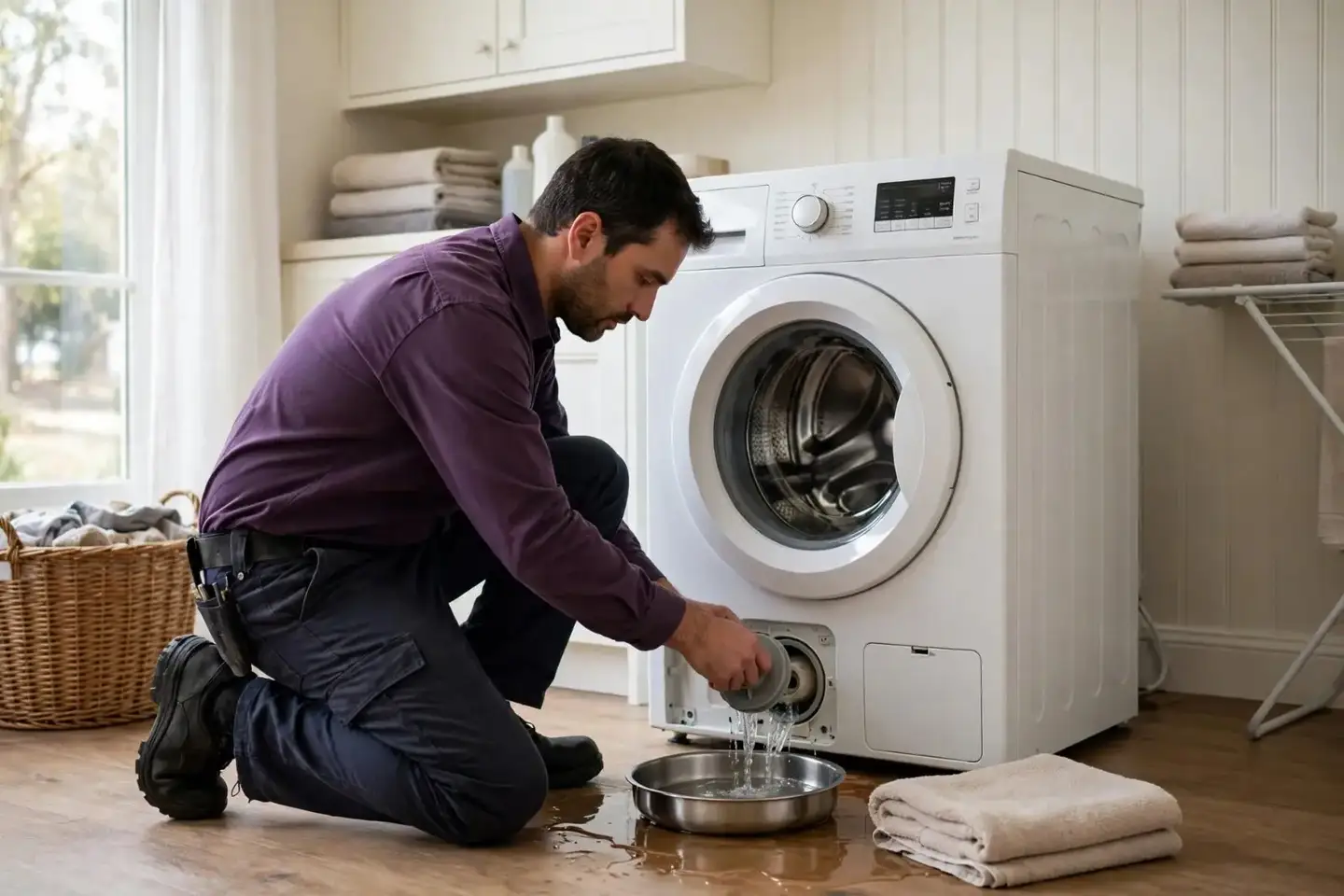
Clean the pump filter
Most front-loaders have a small door at the bottom front. Put down towels and a shallow pan, open the drain tube, then unscrew the filter.
Check the drain hose
Make sure it is not kinked behind the machine and is not pushed too far into the standpipe.
Rebalance the load
One heavy item like a rug or a single towel can stop a spin. Spread the load and try again.
Look at the inlet hoses
Bulges, cracks or rust at the ends mean the hose should be replaced before it bursts.
Washer parts that fail most often
- Drain pump
- Jams on coins and small items, or the motor fails.
- Door lock or lid switch
- The most common reason a washer fills and agitates but will not spin.
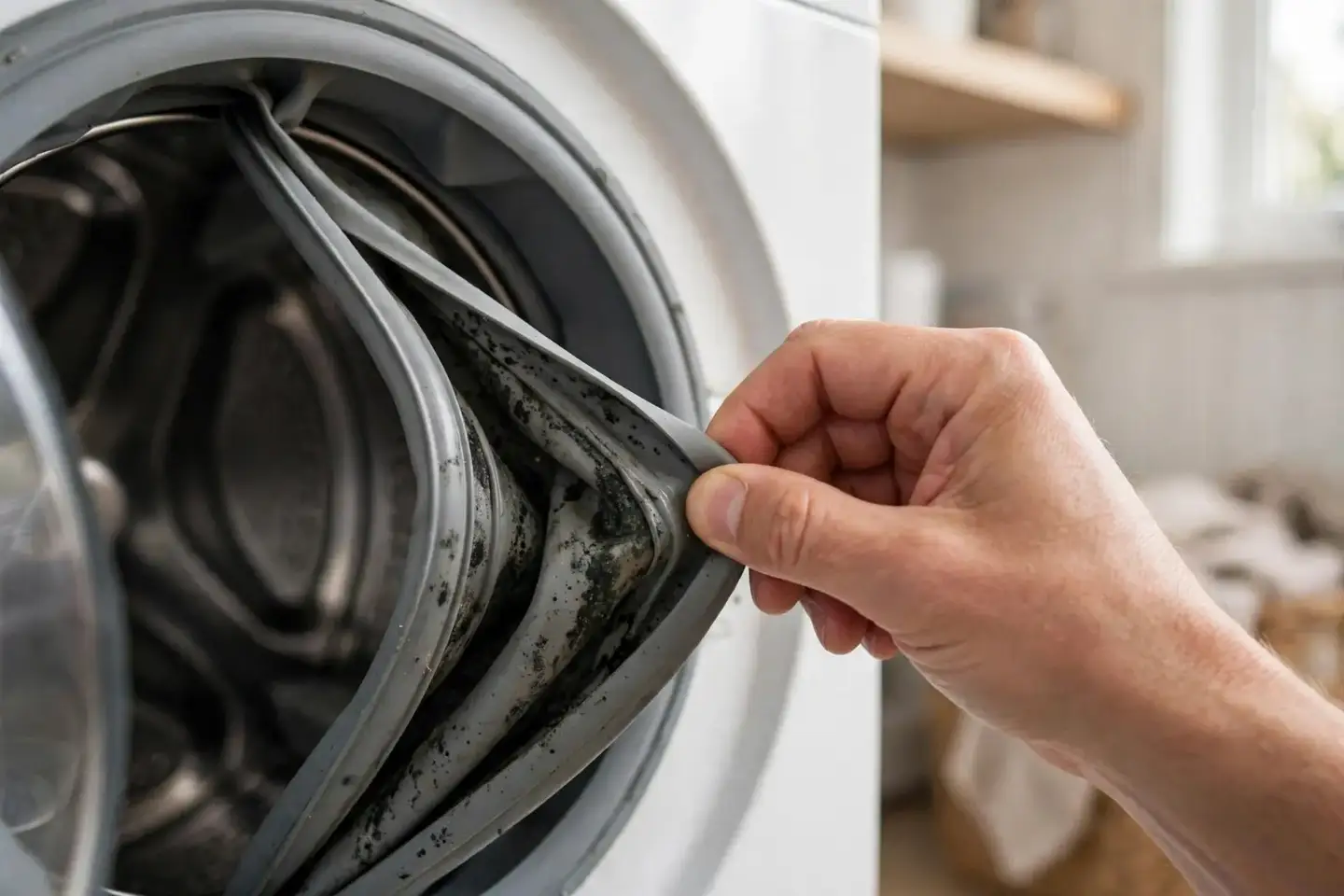
- Door boot gasket
- Front-loader seal that tears and holds mildew.
- Drum bearings
- Wear on front-loaders and make a roaring sound in spin.
- Inlet valve
- Fails open or closed and is scaled by hard water.
Washer Repair: common questions
How often should washer hoses be replaced?
Many manufacturers and insurers suggest checking them regularly and replacing rubber hoses about every five years, or sooner if they bulge or crack. Braided stainless hoses resist bursting better.
Why does my front-loader smell?
Moisture trapped in the door gasket and detergent residue. Leave the door open between loads, wipe the gasket, and run the cleaning cycle monthly.
Is it OK to use regular detergent in an HE washer?
No. High-efficiency washers need HE detergent. Regular detergent oversuds and can cause leaks and drain errors.
How long does a washer last?
Life expectancy studies put washers at around 10 years, with a wide range depending on use and water hardness.
Need a technician to look at it today?
Call and describe the appliance, the model and what it is doing. You are connected with an independent appliance repair technician who takes urgent work in your area, where one is available.
(800) 555-0199Calls answered 24 hours a day, 7 days a week
Fixwell Appliance Repair is a referral service. Your call goes to an independent appliance repair technician who sets their own schedule. Ask about insurance and the repair warranty before work starts. How this works
Call now · 24/7
Talk to a technician by phone
Call Now (800) 555-0199Have this ready when you call
- Your ZIP code
- The appliance, brand and model number
- What is happening, any error code, and whether water or gas is involved
Gas smell, smoke or flames: leave and call 911 or the gas utility first.