
Safety guide
Dryer fire safety
Updated · Fixwell Appliance Repair editorial
Short answer
Clothes dryers cause thousands of home fires in the U.S. every year, and the U.S. Fire Administration lists failure to clean as a leading factor. Lint is highly flammable, and when airflow is restricted the dryer runs hotter. A few habits remove most of the risk.
Why dryers catch fire
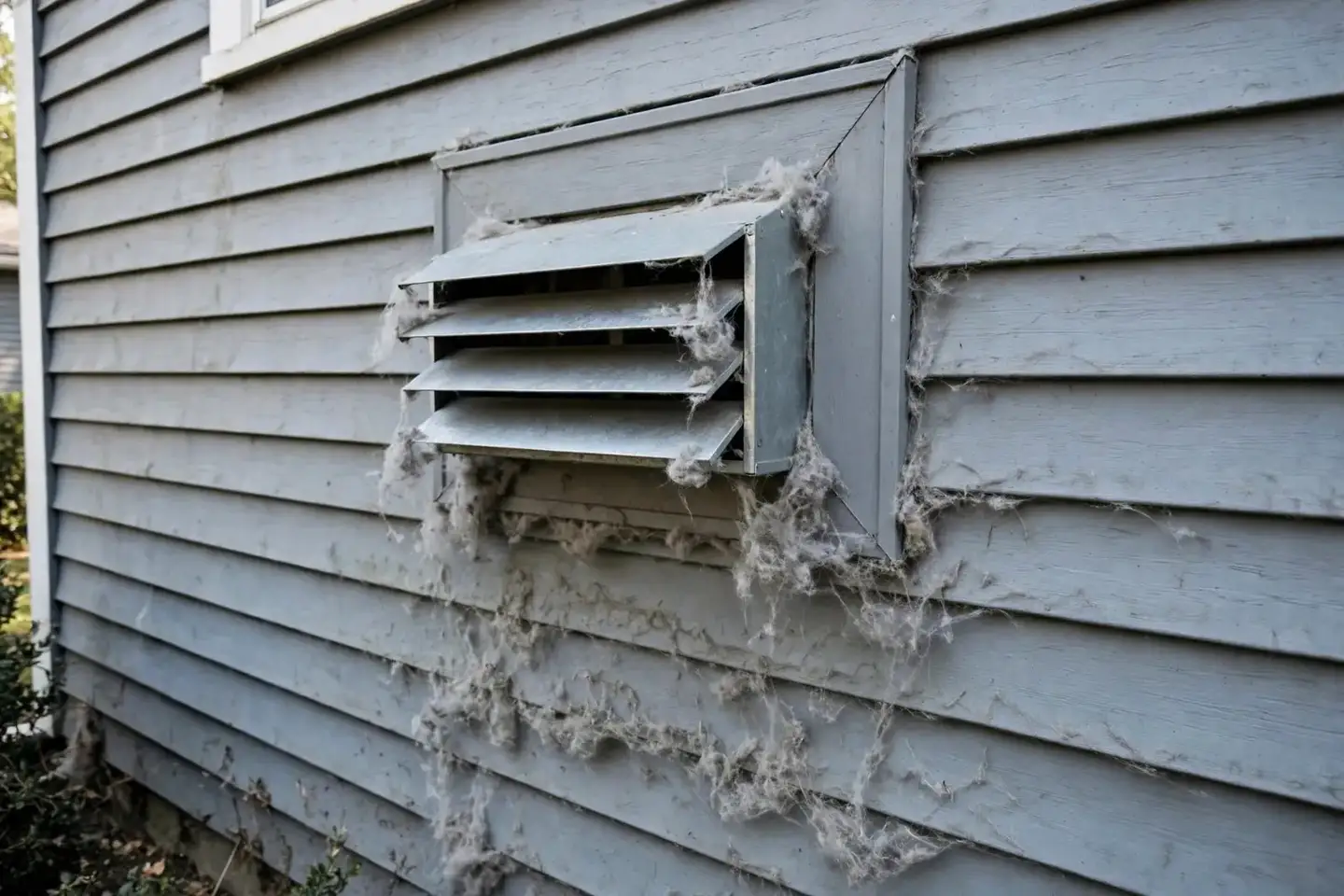
Lint escapes the screen and collects in the cabinet and vent. Heat plus lint plus restricted airflow is the combination behind most dryer fires.
- Lint buildup
- In the vent, the blower and under the drum.
- Restricted vents
- Crushed ducts, long runs and blocked hoods.
- Oily items
- Rags with oil or chemicals can self-heat in a dryer.
Prevention habits
Clean the lint filter every load
Before or after each cycle.
Check the outside vent
Make sure the flap opens and nothing blocks it.
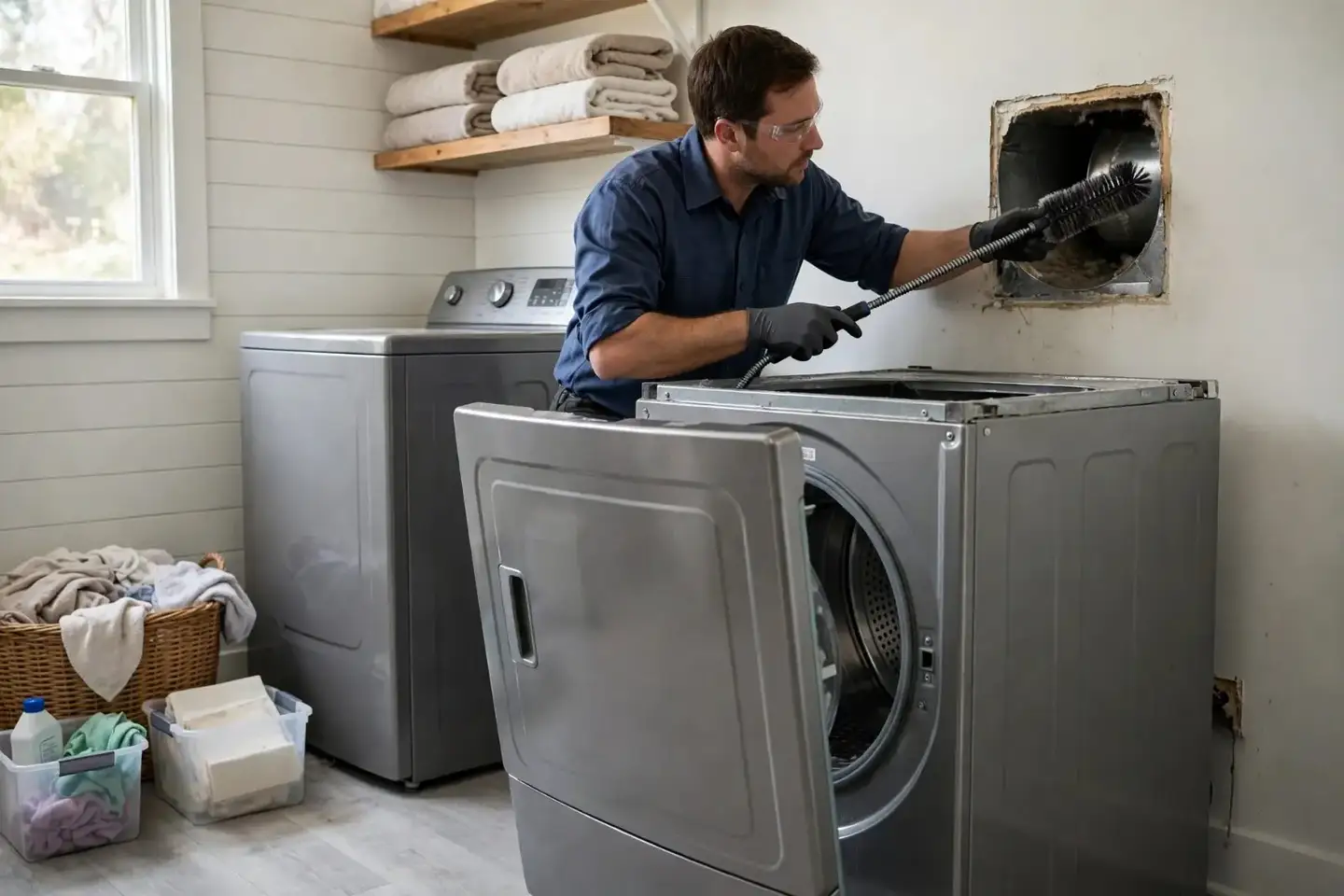
Clean the vent periodically
See dryer vent cleaning.
Do not leave it running
When you leave home or go to bed.
Use metal duct
Rigid or semi-rigid metal, not plastic or foil.
Warning signs: dryer fire safety
Clothes take longer to dry
Airflow is restricted.
Dryer or laundry room very hot
Heat is not escaping.
Burning smell
Stop using it until inspected.
Lint around the outside hood
Buildup inside the run.
Sources
This guide summarizes public safety advice from the NFPA and the U.S. Fire Administration. Read their pages for the full guidance.
What a safe vent looks like
Safety and building guidance generally calls for rigid or semi-rigid metal duct, as short and straight as practical, ending at an exterior hood with a flap that opens freely. Plastic and foil accordion ducts crush easily, sag and trap lint, which is why fire safety groups advise against them.
Screens or bird guards on the outside hood can catch lint and block the opening, so a louvered hood that stays clear is usually preferred. Vents that run through the roof or a long horizontal distance need cleaning more often because lint settles along the run.
Inside the dryer, lint also gathers in the blower housing and under the drum, out of reach of the screen. A technician can clean these areas when the cabinet is open for a repair. If the dryer cabinet feels very hot, the laundry room gets humid, or loads take more than one cycle, treat it as a warning sign and stop using the dryer until airflow is checked.
Questions: dryer fire safety
Is it safe to dry clothes overnight?
Fire safety agencies advise against running a dryer while you sleep or are out.
Are gas dryers riskier than electric?
Both can cause lint fires. Gas dryers also need correct gas connections and venting.
How often should I clean the vent?
Periodically, more often with heavy use. Many households do it yearly.
Can a dryer catch fire when it is not running?
It is rare, but freshly dried items with oil residue can self-heat in a pile. Remove loads promptly and do not dry rags soaked with oil or solvents.
Should I have a smoke alarm near the laundry room?
Fire safety agencies recommend smoke alarms on every level of the home. One near the laundry area adds early warning.
This guide is general information, not professional, legal or insurance advice. Appliances, water conditions and local rules vary. Have a technician diagnose your appliance, and follow the manufacturer's instructions.
Want a technician to look at it?
Call to be connected with an independent appliance repair technician in your area.
(800) 555-0199Calls answered 24 hours a day, 7 days a week
Fixwell Appliance Repair is a referral service. Your call goes to an independent appliance repair technician who sets their own schedule. Ask about insurance and the repair warranty before work starts. How this works
Call now · 24/7
Talk to a technician by phone
Call Now (800) 555-0199Have this ready when you call
- Your ZIP code
- The appliance, brand and model number
- What is happening, any error code, and whether water or gas is involved
Gas smell, smoke or flames: leave and call 911 or the gas utility first.