
Smell gas, see smoke or flames? Leave the building and call 911 or your gas utility from outside before anything else.
Washer problem
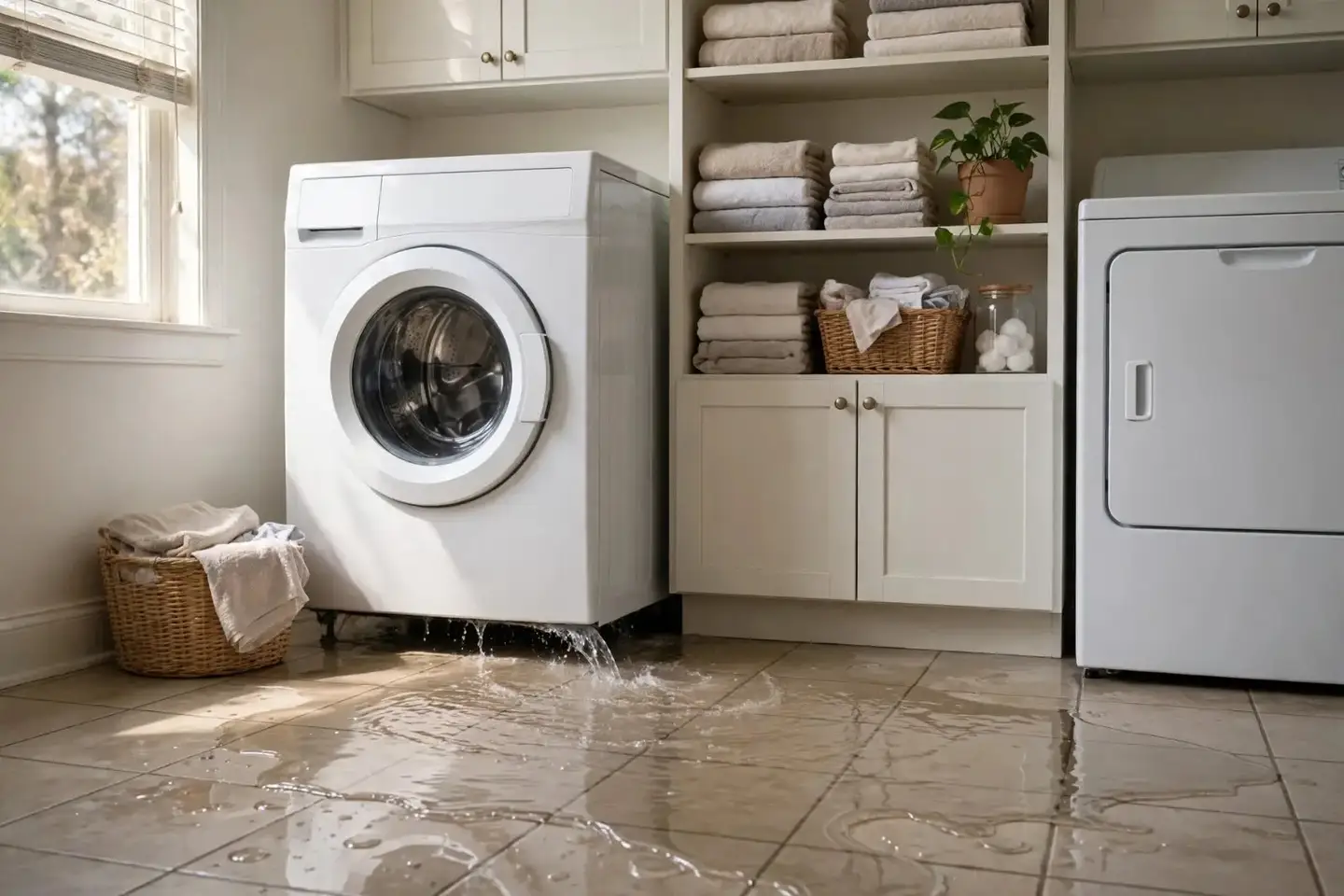
Why is my washer leaking?
Turn off both water supply valves behind the washer first. Then work out when the leak happens: during fill points to hoses and valves, during wash to the door seal or detergent, during drain to the pump and hose.
Calls answered 24 hours a day, 7 days a week. Calls are routed to an independent appliance repair technician. Reviewed .
Timing tells you the source: washer leaking
Leaks during filling, washing and draining come from different parts. Watch one cycle with the front panel or toe kick visible if you can.
- During fill
- Inlet hoses, hose washers or the inlet valve.
- During wash
- Door boot gasket, detergent drawer or oversudsing.
- During drain
- Pump, pump filter cap or drain hose.
Urgency: washer leaking
- Act now
Water is still flowing with the washer off
The supply valve or hose has failed. Close the house main if the valve will not shut. Call now.
- This week
Small leak only during cycles
Stop using it and book a repair.
Signs and causes: washer leaking
| Sign | Likely cause | What fixes it |
|---|---|---|
| Drips at the back when filling | Worn hose washers or cracked hose | Hoses replaced |
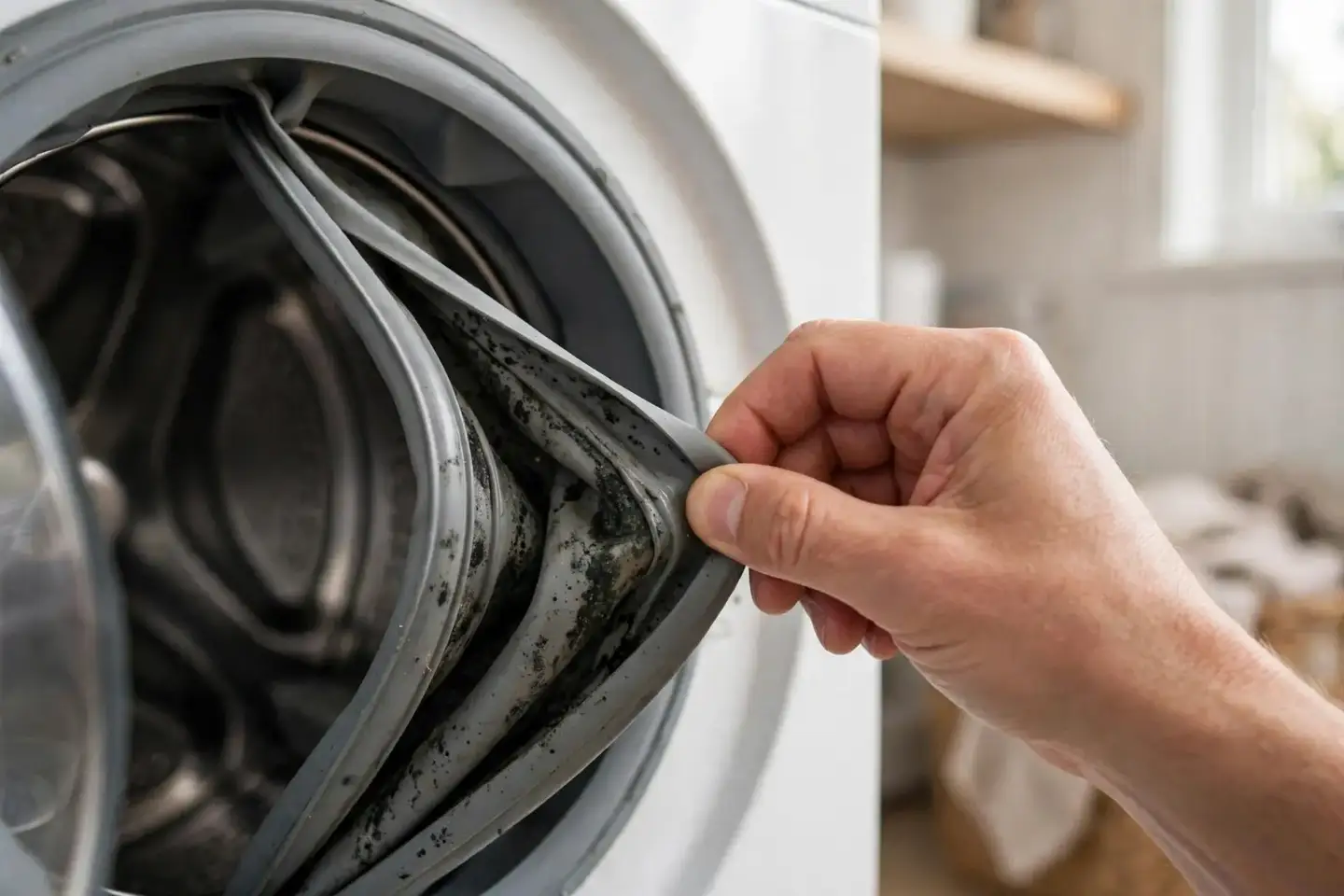
| Water at the front door | Torn door boot or debris on the seal | Seal cleaned or replaced |
| Leak from the bottom during drain | Pump or filter cap | Cap tightened or pump replaced |
| Suds from the detergent drawer | Too much or non-HE detergent | Detergent changed |
| Leak during spin only | Tub seal or bearing failure | Tub seal repair or replacement weighed |
First steps: washer leaking
Turn off the water
Close both valves and unplug the washer.
Dry the floor
Then watch for where fresh water appears.
Inspect hoses
Look for drips at both ends and bulges along the hose.
Check the door seal
Pull back the folds and look for tears and trapped items.
Avoid: washer leaking
Running loads with a known leak
Water under flooring spreads and causes mold.
Using the washer with water near the outlet
Shock risk. Keep the plug dry.
Preventing the next flood
Most serious washer floods come from a burst inlet hose, not the washer itself. Replace rubber hoses with braided stainless ones, check them each year for bulges and rust at the fittings, and leave a few inches of space behind the machine so they are not kinked.
In upstairs laundry rooms, a washer drain pan piped to a drain and a water leak alarm limit the damage when something does fail. Turning off the supply valves when you leave home for a long trip removes the risk entirely.
Questions people ask: washer leaking
Should I put a pan under my washer?
A washer drain pan with a drain line, or a water leak alarm, limits damage in upstairs laundry rooms.
Do hoses really burst?
Yes. Rubber hoses age and burst under constant water pressure. Braided stainless hoses are more resistant.
Is a leaking washer covered by insurance?
That depends on your policy. Sudden failures and gradual leaks are often treated differently.
Why does my washer leak only on the spin cycle?
Spin pushes water hard against seals and connections. A worn tub seal, a loose drain hose clamp or a cracked pump housing often show up only then.
This page is general safety information, not a diagnosis. Appliances combine electricity, water and sometimes gas. If you are unsure whether something is safe, unplug it or switch it off at the breaker and have a technician inspect it. For a gas smell, leave and call 911 or the gas utility.
Want it checked today?
Call to be connected with an independent appliance repair technician in your area.
(800) 555-0199Calls answered 24 hours a day, 7 days a week
Fixwell Appliance Repair is a referral service. Your call goes to an independent appliance repair technician who sets their own schedule. Ask about insurance and the repair warranty before work starts. How this works
Call now · 24/7
Talk to a technician by phone
Call Now (800) 555-0199Have this ready when you call
- Your ZIP code
- The appliance, brand and model number
- What is happening, any error code, and whether water or gas is involved
Gas smell, smoke or flames: leave and call 911 or the gas utility first.