
Kitchen appliance repair
Dishwasher repair
Most dishwasher calls are about water going where it should not: standing water that will not drain, dishes that come out dirty because water is not reaching them, or a puddle on the floor. Filters, drain hoses and spray arms explain a large share of them, and those you can often clear yourself.
Calls answered 24 hours a day, 7 days a week. Calls are routed to an independent appliance repair technician. Reviewed .
Dishwasher parts that fail most often
- Drain pump
- Hums but does not move water when jammed by glass or a fruit pit, or when the motor fails.
- Door latch and switch
- The dishwasher will not start if it does not sense a closed door.
- Inlet valve
- Fails open (overfill) or closed (no water), and hard water scales it.
- Door gasket
- Hardens and cracks with heat and age, and leaks at the bottom corners.
- Heating element
- On models with an exposed or hidden heater, failure gives wet, cold dishes.
Dishwasher symptoms and what usually causes them
| What you notice | Usual cause | Usual fix |
|---|---|---|
| Standing water after a cycle | Clogged filter, blocked drain hose, disposal knockout plug, failed drain pump | Clean or clear first; pump replacement if it hums but does not pump. See dishwasher not draining. |
| Dishes still dirty or gritty | Dirty filter, blocked spray arm holes, low water, wrong detergent amount | Filter and arms cleaned; inlet valve tested |
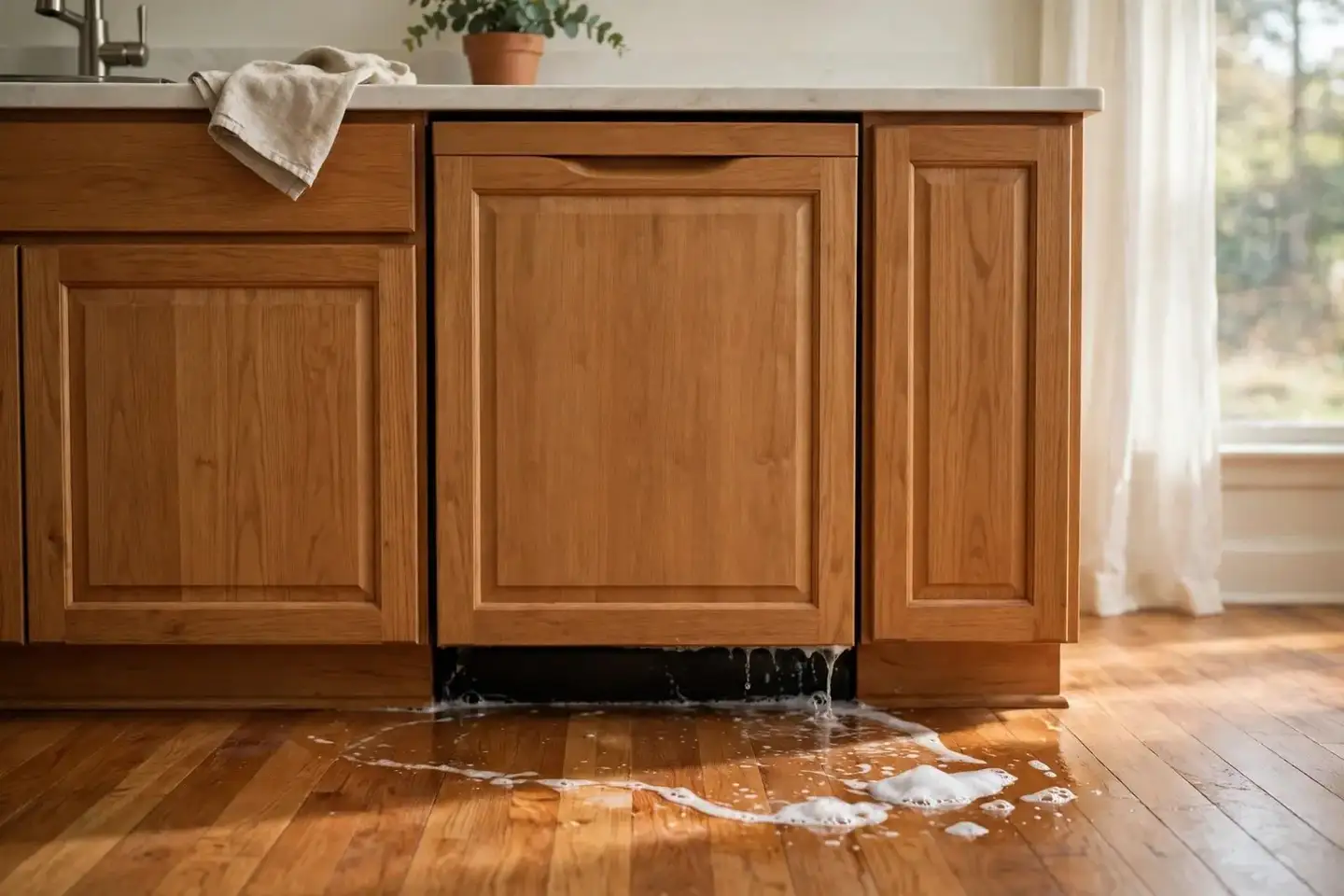
| Puddle under the door | Worn door gasket, wrong detergent sudsing, unlevel unit | Gasket replaced, unit leveled |
| Leak from underneath | Pump seal, hose clamp or inlet connection | Seal, hose or fitting replaced |
| Will not start | Door latch switch, child lock, control board | Latch tested and replaced if failed |
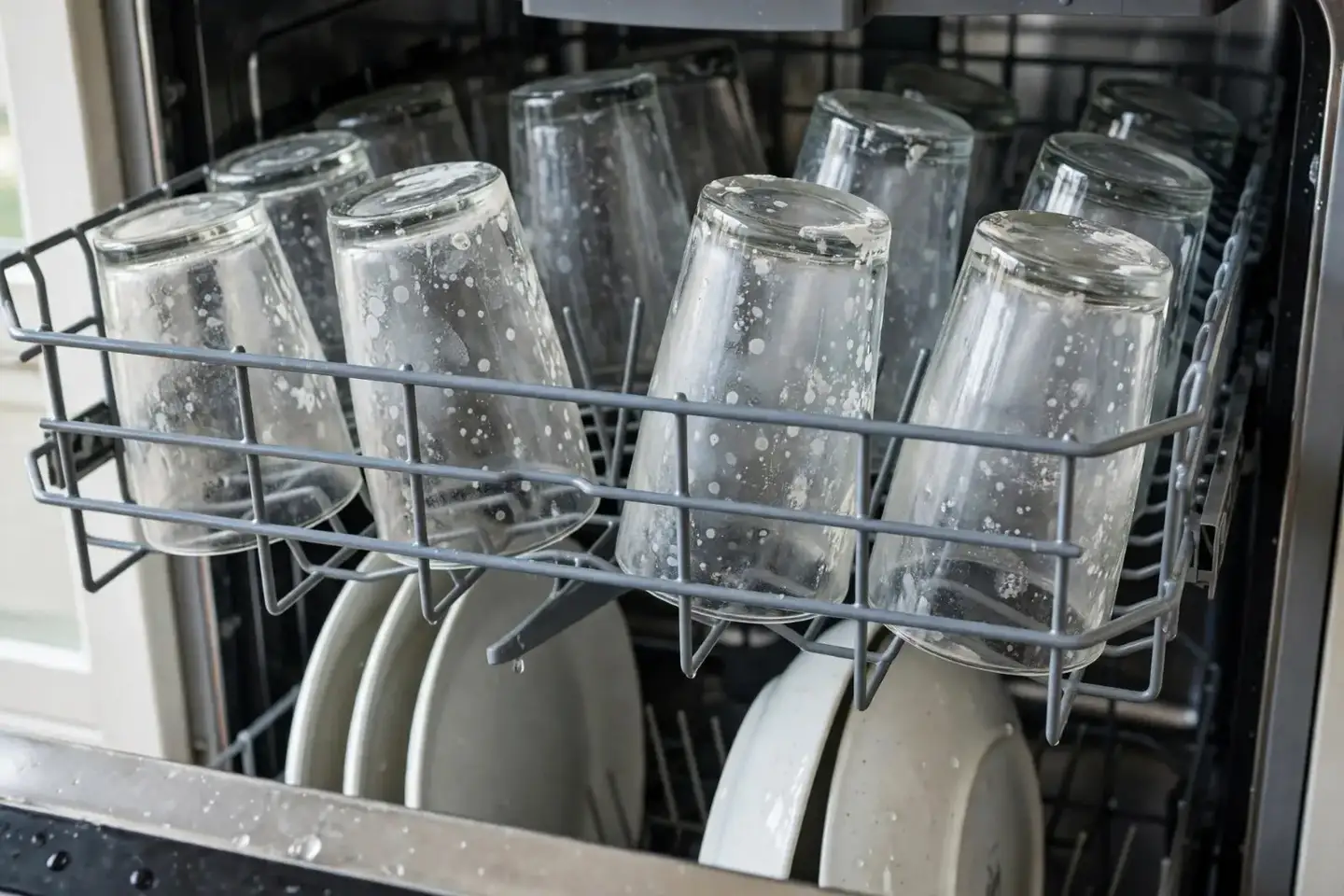
| Cloudy glasses | Hard water scale or too much detergent | Rinse aid and hard water treatment |
Repair, wait or replace?: dishwasher repair
- Act now
Water is leaking onto the floor
Stop the cycle, turn the dishwasher off and close its supply valve under the sink. Book a repair.
- This week
Standing water but no leak
Clean the filter and check the drain hose. If that fails, book a repair.
- Plan it
A rusted tub or a failed control board on an older unit
Weigh repair against replacement.
What a dishwasher repair covers
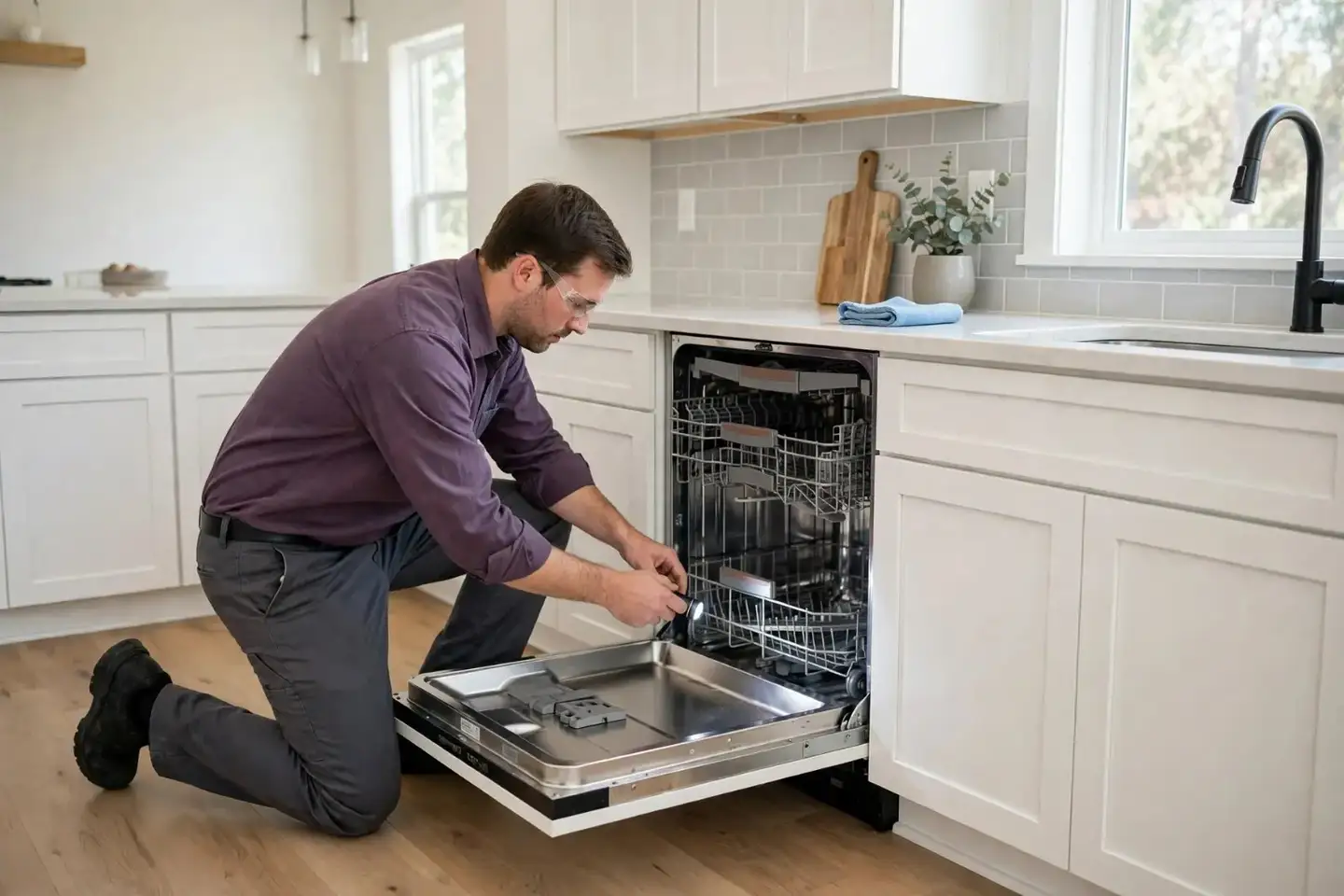
A dishwasher fills through an inlet valve, heats the water, sprays it with a circulation pump, and pumps it out through a drain pump. A repair visit tests each stage in order until the faulty one is found.
- Fill
- Inlet valve and float switch. Too little water gives poor cleaning; a stuck valve overfills.
- Wash
- Circulation pump, spray arms and filter. Blocked arms and a clogged filter cause most cleaning complaints.
- Drain
- Drain pump, hose and air gap or high loop. Food and grease in any of them leaves standing water.
- Heat and dry
- Heating element or water heater feed, thermostat or sensor, and the rinse aid dispenser.
How the visit runs
Run a diagnostic cycle
Most current models have a service mode that runs each part in turn and shows error codes.
Check the drain path
Filter, sump, pump, hose, air gap and the disposal or sink connection are checked in order.
Test parts
Valves, pumps, the heater and the latch are tested with a meter before replacement.
Leak test
After the repair a cycle is run with the toe kick off so any leak shows before it reaches the floor.
What you can do before calling
Turn off the dishwasher at its breaker or unplug it before reaching into the tub.
Clean the filter
Most modern dishwashers have a twist-out filter under the lower spray arm. Rinse it under the tap. Many manuals suggest doing this monthly.
Clear the spray arms
Pull them off and push out blocked holes with a toothpick.
Check the drain path
If the dishwasher drains into a new garbage disposal, the knockout plug inside the disposal inlet may still be in place.
Run hot water first
Run the kitchen tap until it is hot before starting a cycle, so the first fill is not cold.
What affects a dishwasher repair
- Access
- Some pumps can be reached from the front; others need the dishwasher pulled out from the cabinet.
- Flooring and counters
- Tile laid after installation can trap a dishwasher in place and adds time to removal.
- Water hardness
- Areas with hard water see more valve, heater and pump failures. See hard water and appliances.
Dishwasher Repair: common questions
Is it normal for water to sit in the bottom of a dishwasher?
A small amount in the sump under the filter is normal. Water above the filter after a finished cycle is not and points to a drain problem.
Why does my dishwasher smell?
Food trapped in the filter and the door gasket. Clean the filter, wipe the gasket, and run an empty hot cycle with a dishwasher cleaner.
Should I use the garbage disposal before running the dishwasher?
Yes, if they share a drain. A full disposal blocks the dishwasher's drain water.
How long should a dishwasher last?
Life expectancy studies, including the NAHB study, put dishwashers at roughly 9 to 10 years, but many last longer with clean filters and soft water.
Talk to a technician about dishwasher repair
Call to be connected with an independent appliance repair technician near you.
(800) 555-0199Calls answered 24 hours a day, 7 days a week
Fixwell Appliance Repair is a referral service. Your call goes to an independent appliance repair technician who sets their own schedule. Ask about insurance and the repair warranty before work starts. How this works
Call now · 24/7
Talk to a technician by phone
Call Now (800) 555-0199Have this ready when you call
- Your ZIP code
- The appliance, brand and model number
- What is happening, any error code, and whether water or gas is involved
Gas smell, smoke or flames: leave and call 911 or the gas utility first.