
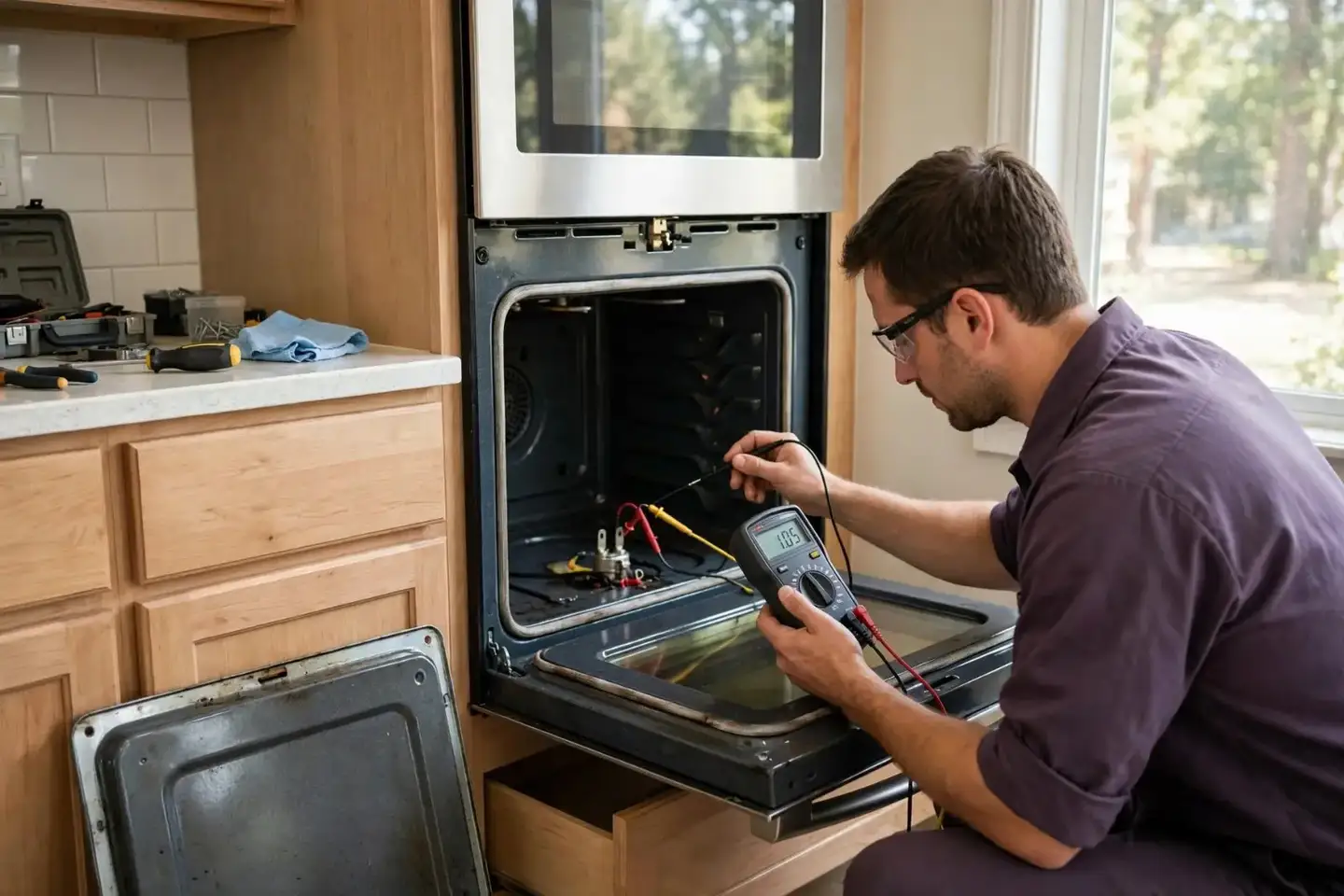
Ranges and wall ovens
Oven repair
When an electric oven will not heat, the bake or broil element, the temperature sensor or the control is usually to blame. In a gas oven, the most common failure by far is a weak igniter that glows but no longer draws enough current to open the gas valve.
Calls answered 24 hours a day, 7 days a week. Calls are routed to an independent appliance repair technician. Reviewed .
Oven symptoms and what usually causes them
| What you notice | Usual cause | Usual fix |
|---|---|---|
| Electric oven does not heat at all | Failed bake element, blown thermal fuse, control relay | Element or fuse replaced after testing. See oven not heating. |
| Gas oven takes a long time to light, or never does | Weak igniter | Igniter replaced |
| Food burns on one side or the bottom | Failed convection fan, broken element section, poor air circulation | Fan or element replaced; rack position checked |
| Temperature runs hot or cold | Sensor out of range or control needs calibration | Sensor tested, offset adjusted |
| Door will not unlock after self-clean | Lock motor or switch fault | Lock assembly replaced |
| Error code on the display | A specific sensor or relay fault reported by the control | Code looked up in the service data and the part tested |
Oven parts replaced most often
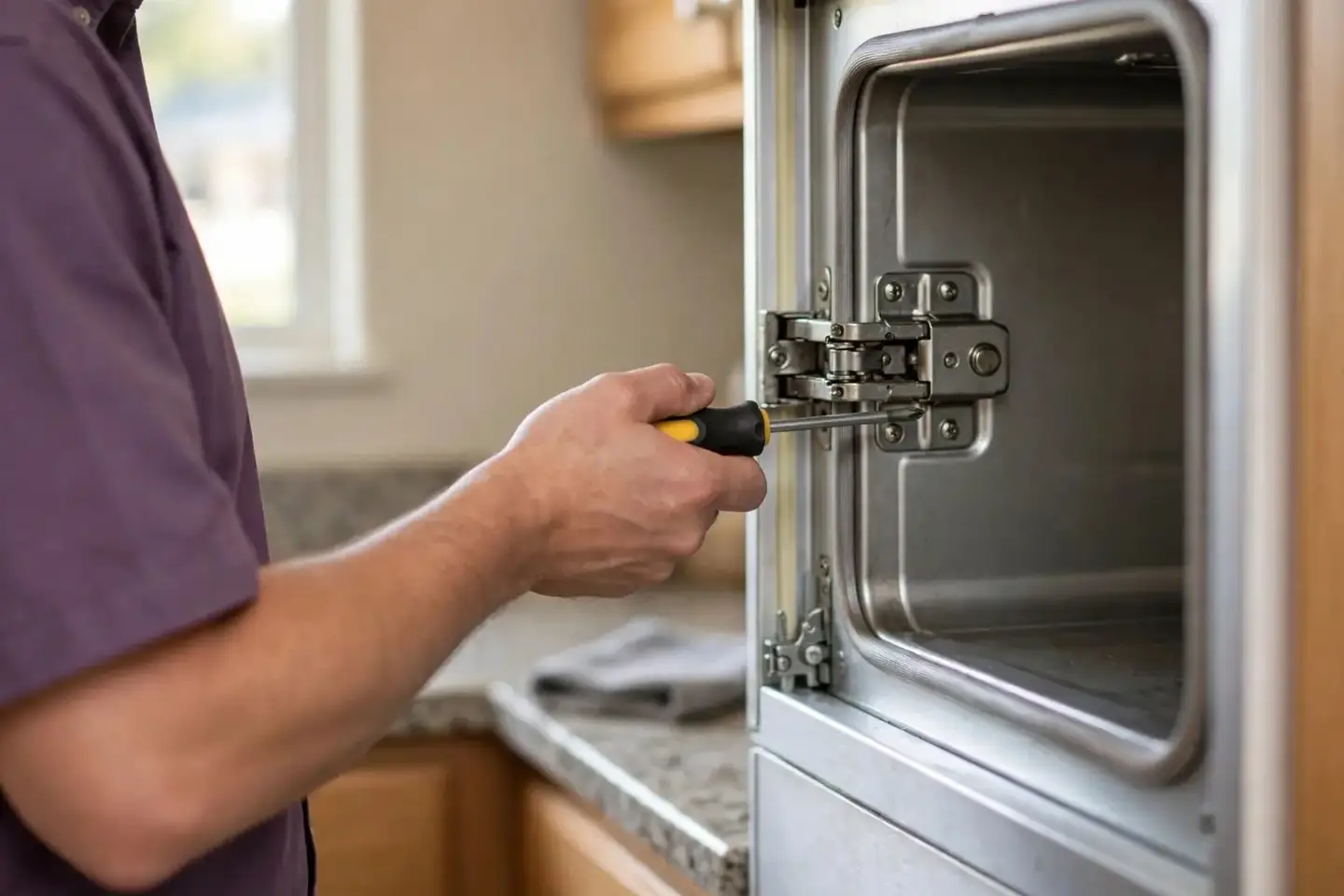
- Bake element
- The single most common electric oven repair.
- Hot surface igniter
- The single most common gas oven repair. It weakens with use before it fails outright.
- Temperature sensor
- A thin probe at the back of the cavity. Tested by measuring its resistance.
- Door hinges and gasket
- Worn hinges and a flattened gasket let heat escape and the door sag.
Gas and electric ovens fail in different places
Both types use a temperature sensor and a control to hold the set temperature. Electric ovens heat with bake and broil elements, and convection models add a fan. Gas ovens use an igniter and a safety valve, and need a gas-qualified technician.
- Electric heating
- Bake and broil elements, the convection element and fan, and the relays on the control board.
- Gas ignition
- Hot surface igniter, safety valve and the burner orifice.
- Temperature control
- The oven sensor, which reads resistance, and the control, which can be recalibrated on many models.
- Door and lock
- Hinges, door glass, gasket and the self-clean lock motor.
When an oven problem needs fast action
- Act now
Smell of gas
Leave the house and call your gas utility or 911 from outside. Do not operate switches.
- Act now
Sparks or flames from an electric element
Turn the oven off at the breaker and do not use it until repaired.
- This week
Oven heats slowly or unevenly
Book a repair visit.
- This week
Cracked outer door glass
Stop using the oven at high heat and order the glass.
How a technician diagnoses an oven
Run the oven
Preheat time and actual temperature are checked against the setting.
Test heat sources
Elements are tested for continuity; a gas igniter's current draw is measured.
Check the control
Sensor resistance and the board's output relays are checked if the heat sources pass.
Gas safety
On gas models, connections disturbed during the repair are leak tested before the visit ends.
Safe checks before you call
If you smell gas, do not touch any switch. Leave the house and call your gas utility or 911 from outside.
Check the clock and lockout
Many ovens will not heat until the clock is set after a power cut, or while a control lock is on.
Look at the elements
On an electric oven, a bake element with a blister, crack or burned spot has failed.
Watch a gas igniter
Through the broiler drawer or the oven floor slots, a healthy igniter glows and the burner lights within about a minute.
Use an oven thermometer
Check the temperature at the center rack before assuming the control is wrong.
What changes an oven repair
- Wall oven or range
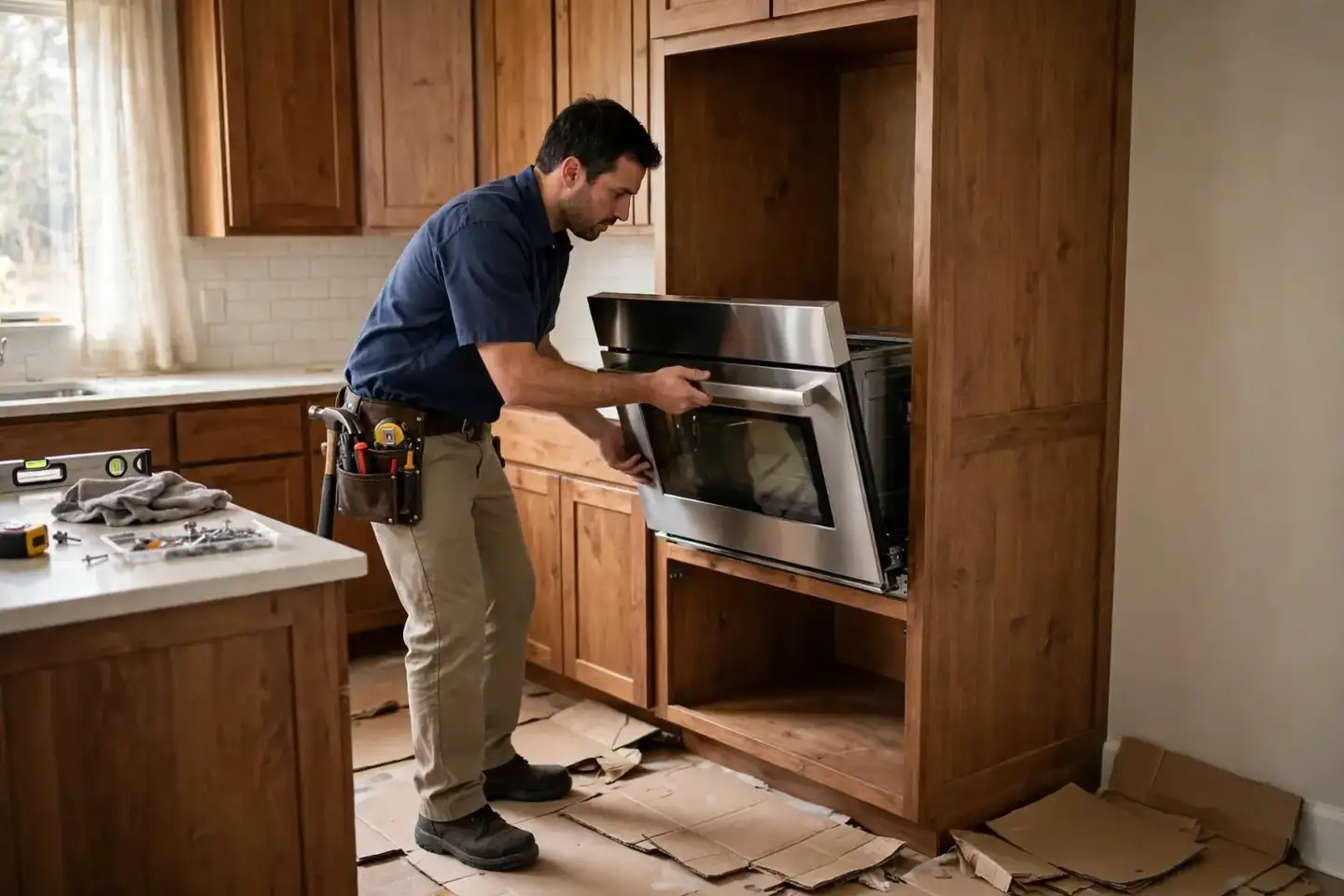
- Wall ovens may have to be slid out of the cabinet, which takes two people.
- Gas or electric
- Gas work requires a technician qualified for gas connections where your area requires it.
- Control boards
- Touch controls and boards are model specific and may need ordering.
Oven Repair: common questions
Is self-clean bad for my oven?
Self-clean runs very hot, and that heat is a common time for thermal fuses, sensors and lock motors to fail on older ovens. Wiping spills regularly reduces how often you need it.
Why does my gas oven smell of gas briefly when it lights?
A faint smell for a second or two at ignition can be normal, and is more noticeable with a weak igniter. A smell that persists, or any smell with the oven off, is not normal. Leave and call the gas utility.
Can I replace an oven element myself?
Many bake elements are held by two screws and two push-on terminals. Switch the oven off at the breaker first. If the terminals are burned, the wiring behind them also needs attention.
How accurate should an oven be?
Most ovens cycle a little above and below the setting. Many controls let you adjust the offset, which the owner's manual explains.
Talk to a technician about oven repair
Call to be connected with an independent appliance repair technician near you.
(800) 555-0199Calls answered 24 hours a day, 7 days a week
Fixwell Appliance Repair is a referral service. Your call goes to an independent appliance repair technician who sets their own schedule. Ask about insurance and the repair warranty before work starts. How this works
Call now · 24/7
Talk to a technician by phone
Call Now (800) 555-0199Have this ready when you call
- Your ZIP code
- The appliance, brand and model number
- What is happening, any error code, and whether water or gas is involved
Gas smell, smoke or flames: leave and call 911 or the gas utility first.