
Smell gas, see smoke or flames? Leave the building and call 911 or your gas utility from outside before anything else.
Kitchen appliance repair
Refrigerator repair
A refrigerator that runs but does not cool usually has a blocked airflow path, a dirty condenser or a failed fan, defrost part or control board. Those are repairable. A failed sealed system (compressor or refrigerant leak) is the major case, and it is worth knowing which one you have before deciding.
Calls answered 24 hours a day, 7 days a week. Calls are routed to an independent appliance repair technician. Reviewed .
What to check before you call
None of these need tools or opening a panel.
Confirm the settings
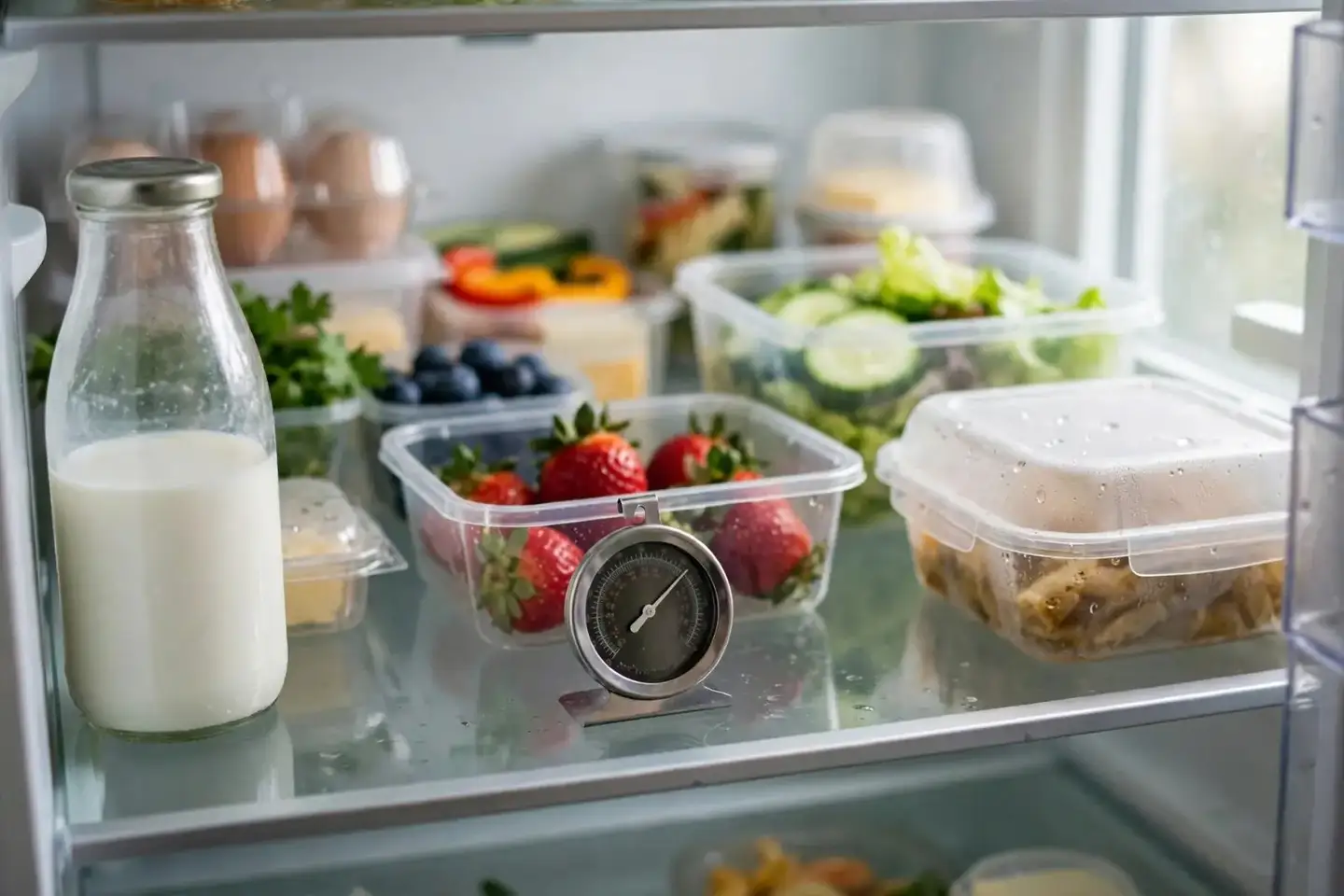
Thermostats get bumped while loading groceries. The fresh-food side should sit near 37 °F and the freezer near 0 °F, as FDA guidance recommends.
Check the vents
Move anything pressed against the air outlets inside the freezer and the fresh-food side. Blocked vents mimic a failed fan.
Listen at the back
If the compressor hums but the condenser fan near it is still, that fan is the likely fault.
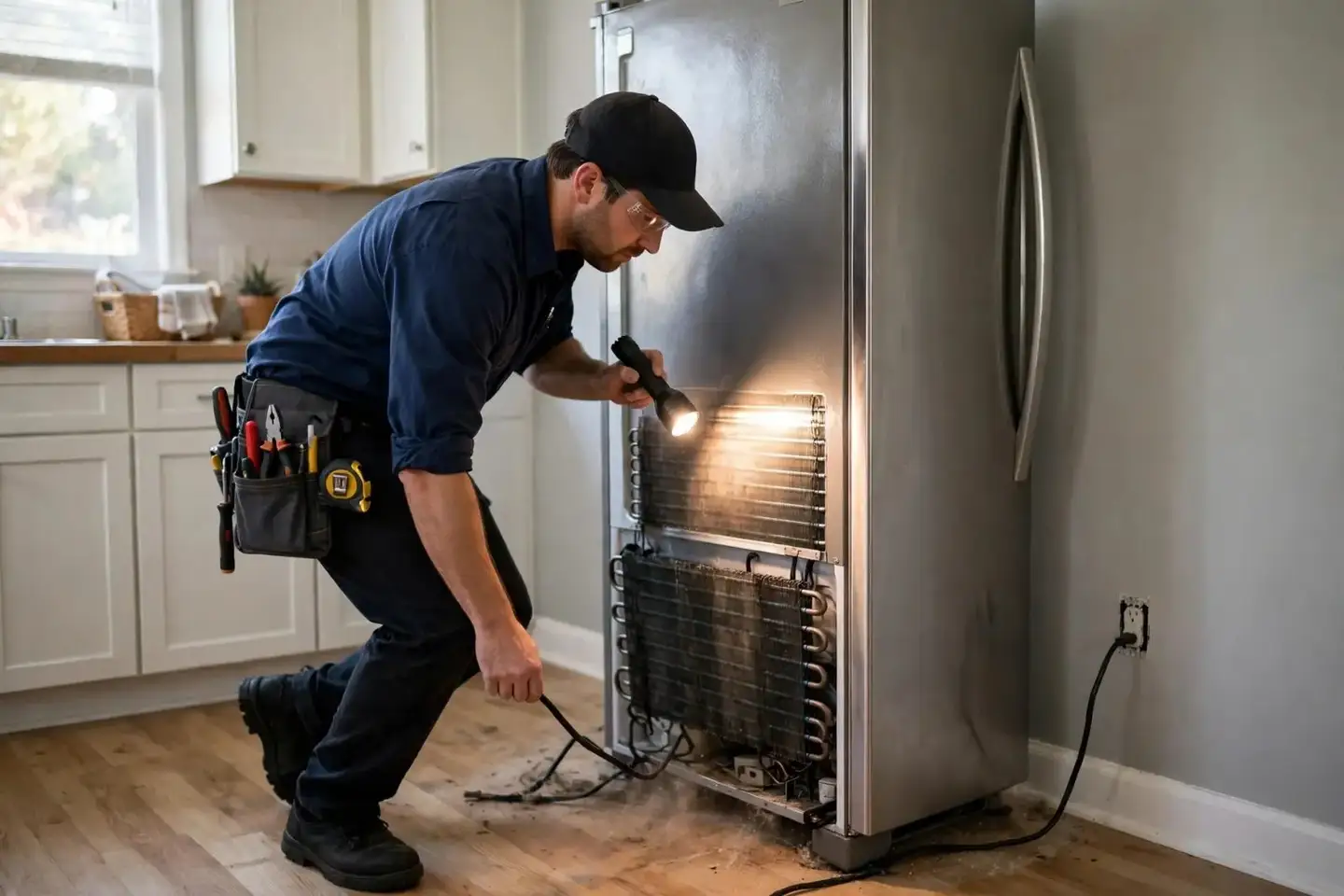
Look at the condenser
On models with the coil underneath or behind, heavy dust and pet hair make the unit run hot and long. Vacuum it with the power unplugged.
Test the door seal
Close the door on a sheet of paper. If it slides out easily in several places, the gasket is not sealing.
What changes the time and parts involved
- Design
- French-door, side-by-side and built-in units take longer to open up than a top-freezer model.
- Parts availability
- Common fans and valves are often on the van. Control boards and model-specific parts may need ordering.
- Sealed system work
- Leak finding, brazing and recharging take far longer than a fan or sensor swap.
- Access
- A unit built into cabinetry may need to be slid out on a protected floor first.
Refrigerator parts that fail most often
- Evaporator fan motor
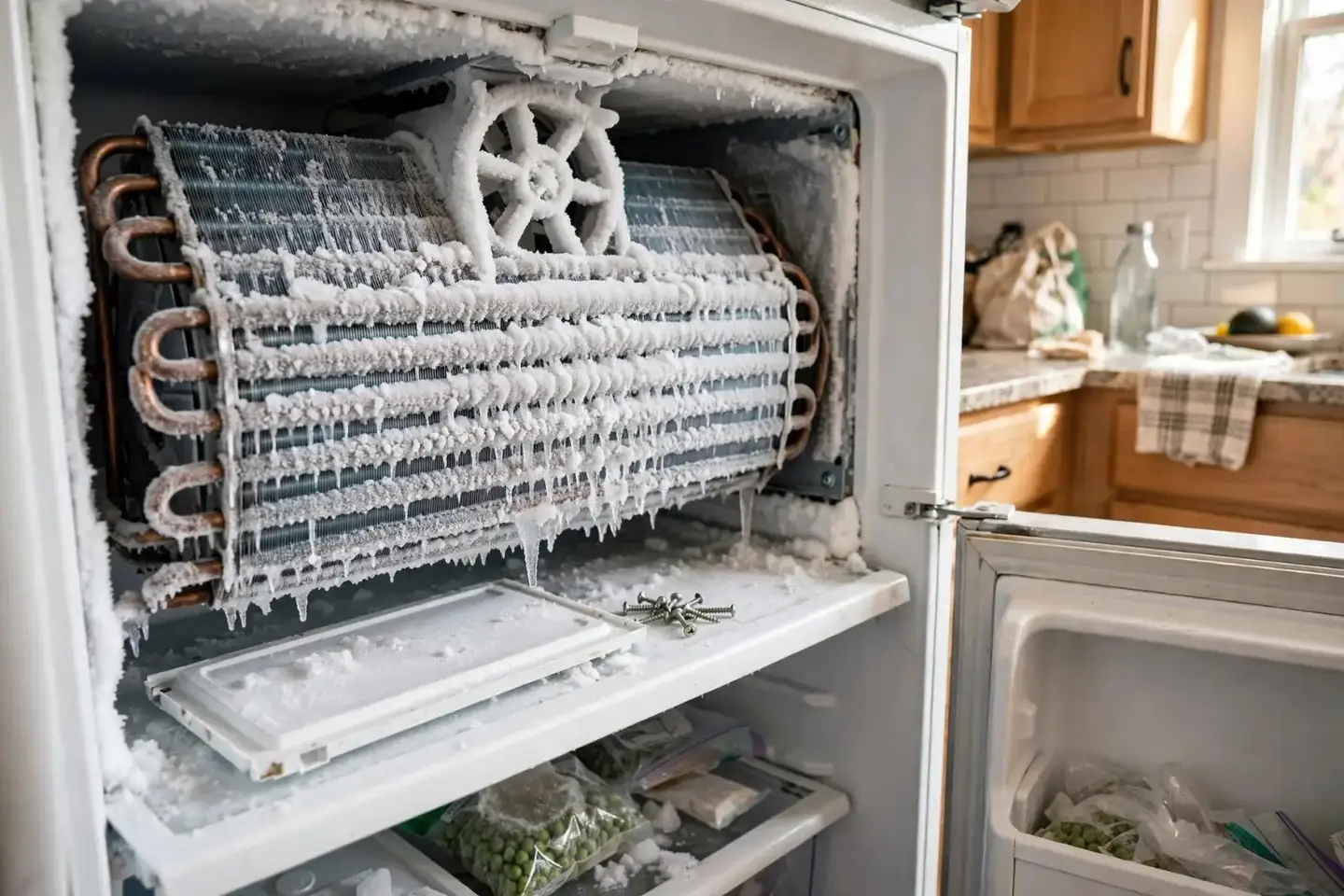
- Circulates cold air from the coil. When it stops, the freezer may stay cold while the fresh-food side warms.
- Defrost heater and sensor
- Melt frost off the coil several times a day. One failed part lets the coil ice over solid.
- Condenser fan motor
- Cools the compressor and condenser. Failure causes long run times and a warm cabinet.
- Water inlet valve
- Feeds the ice maker and dispenser. A leaking or stuck valve causes floods or no ice.
- Control or inverter board
- Runs the compressor, fans and defrost on modern models. Usually replaced as a unit after testing.
Repair now, repair soon or replace?
- Act now
The fresh-food side is above 40 °F
Move medicines and perishables to a cooler with ice and call for service today.
- This week
Running constantly but still holding temperature
Clean the condenser and book a visit before the compressor works itself to failure.
- Plan it
Diagnosis is a sealed-system leak on an older unit
Compare repair with replacement before agreeing. See repair or replace.
- This week
Small leak or noise with normal temperatures
Book a routine repair visit.
What a refrigerator repair covers
Cold air is made in the freezer section and blown into the fresh-food side. When either side warms up, the technician follows that air path: the evaporator coil and its fan, the defrost system, the condenser and its fan, then the compressor and controls.
- Airflow and fans
- Evaporator and condenser fan motors, the damper that feeds the fresh-food side, and ducts blocked by ice or packed food.
- Defrost system
- Heater, thermostat or sensor and the control that runs the cycle. A failure here lets frost choke the coil within days.
- Water and seals
- Door gaskets, drain lines, water inlet valves, supply lines and filter housings on models with a dispenser.
- Sealed system
- Compressor, start relay and refrigerant leaks. Refrigerant work needs EPA Section 608 certification, so ask for it if the diagnosis points here.
Common refrigerator symptoms and what usually causes them
Most of these have a matching problem page with what is safe to check first.
| What you notice | Usual cause | Usual fix |
|---|---|---|
| Freezer is cold, fresh-food side is warm | Frosted evaporator coil, failed evaporator fan or stuck damper | Defrost part, fan motor or damper replacement. See refrigerator not cooling. |
| Both sides warm, compressor clicks | Failed start relay or overheating compressor | Relay replacement, or sealed system diagnosis |
| Water on the floor in front | Frozen or blocked defrost drain, or a cracked inlet line | Drain cleared and heated, line or valve replaced. See refrigerator leaking water. |
| Loud buzzing, rattling or squealing | Fan blade hitting ice, worn fan motor or a loose drain pan | Fan motor or bracket replaced, ice cleared |
| Runs all the time | Dirty condenser coil, worn door gasket or low refrigerant | Coil cleaning, gasket replacement or leak test |
| Frost on food and walls | Door not sealing or left ajar, defrost fault | Gasket or hinge adjustment, defrost repair |
How the technician finds the fault
Temperatures first
Both compartments and the air at the vents are measured so the complaint is confirmed, not assumed.
Behind the freezer panel
The evaporator coil is checked for a frost pattern. Even light frost points to airflow; a solid block points to defrost.
Components tested
Fans, heaters, sensors and the relay are tested with a meter, and the control is put through a diagnostic mode where the model has one.
Repair and confirm
The failed part is replaced and the unit is run until temperatures start dropping. Full recovery can take several hours.
Refrigerator Repair: common questions
How long can food stay safe if the refrigerator stops?
The USDA says a closed refrigerator keeps food safe for about four hours without power. After that, perishables above 40 °F for more than two hours should be thrown out. Keep the doors shut while you wait.
Is it worth repairing an older refrigerator?
A fan, defrost part or valve is usually worth fixing at almost any age. A compressor or refrigerant leak on an older unit often is not. Ask for the diagnosis in writing and weigh it against replacement.
Why is my freezer cold but my refrigerator warm?
Because the fresh-food side is cooled by air from the freezer. A frosted coil, a stopped evaporator fan or a stuck damper cuts that air off while the freezer stays cold.
Do I need to empty it before the technician arrives?
Not entirely, but clear the back wall of the freezer and keep a cooler ready. If the evaporator panel has to come off, the freezer needs to be empty for a short time.
Need a technician to look at it today?
Call and describe the appliance, the model and what it is doing. You are connected with an independent appliance repair technician who takes urgent work in your area, where one is available.
(800) 555-0199Calls answered 24 hours a day, 7 days a week
Fixwell Appliance Repair is a referral service. Your call goes to an independent appliance repair technician who sets their own schedule. Ask about insurance and the repair warranty before work starts. How this works
Call now · 24/7
Talk to a technician by phone
Call Now (800) 555-0199Have this ready when you call
- Your ZIP code
- The appliance, brand and model number
- What is happening, any error code, and whether water or gas is involved
Gas smell, smoke or flames: leave and call 911 or the gas utility first.