
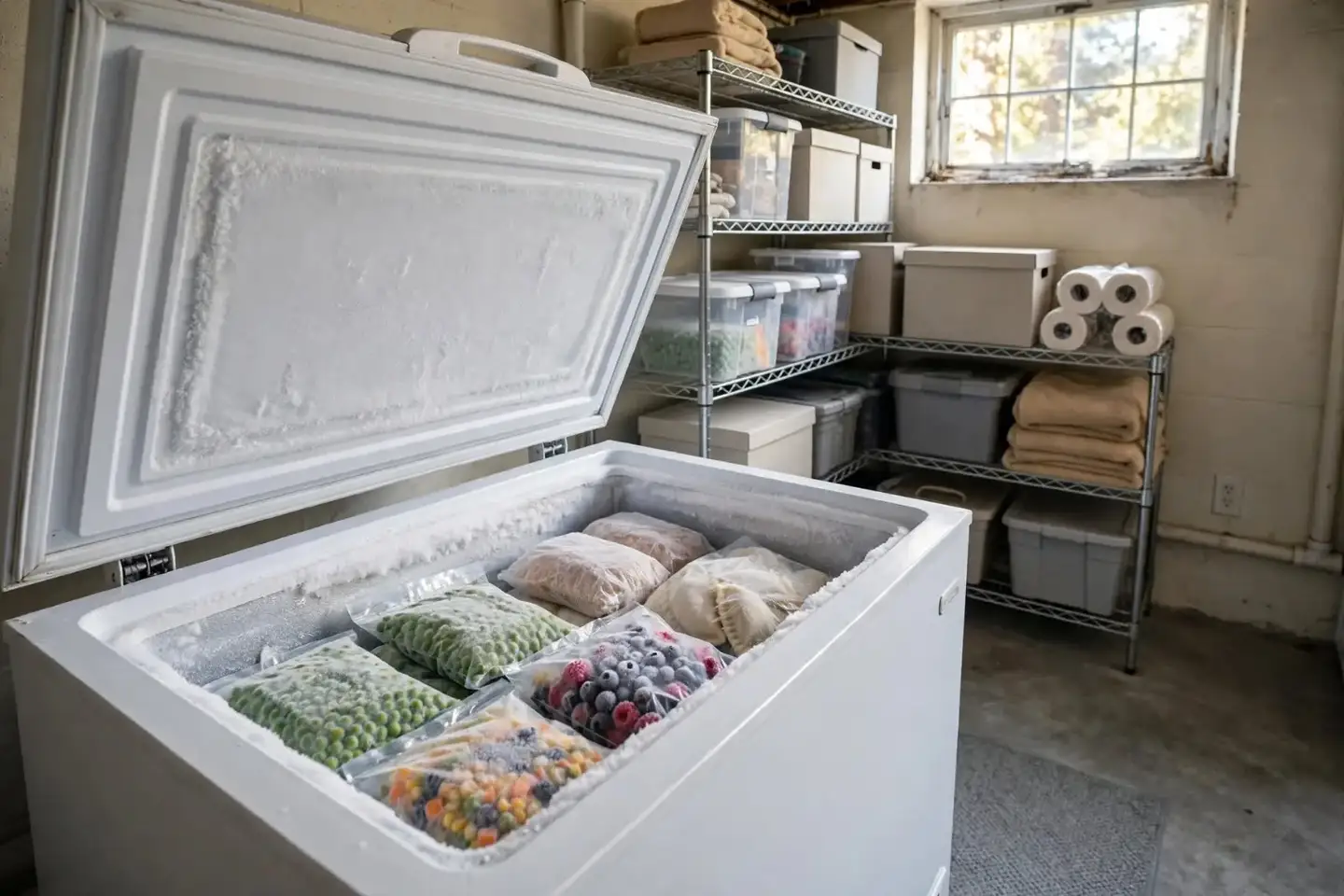
Standalone freezer repair
Freezer repair
Standalone freezers are simpler than refrigerators, so the fault list is shorter: a door that does not seal, a condenser that cannot shed heat, a defrost fault on frost-free uprights, or a sealed-system leak. Chest freezers in garages and basements also struggle when the room itself gets too cold or too hot.
Calls answered 24 hours a day, 7 days a week. Calls are routed to an independent appliance repair technician. Reviewed .
Upright and chest freezers fail differently
A chest freezer has its cooling coils in the walls and no fan inside, so most faults are the door seal, the thermostat, the condenser or the sealed system. Frost-free uprights add a fan and a defrost system, which brings the same faults as a refrigerator.
- Chest freezers
- Manual defrost, coils in the cabinet walls, few moving parts. Long-lived, but sealed-system leaks in the walls are rarely worth fixing.
- Frost-free uprights
- Fan-driven with an automatic defrost cycle. Defrost heaters and sensors are the most common repair.
- Manual-defrost uprights
- Shelves are the cooling coils. Heavy frost cuts capacity and needs a manual defrost, not a part.
- Garage and basement units
- Many are rated for a limited room temperature range. Outside it, the thermostat cannot keep the cabinet frozen.
Freezer symptoms and what they usually mean
| What you notice | Usual cause | Usual fix |
|---|---|---|
| Food soft, freezer silent | No power at the outlet, tripped GFCI, failed thermostat or start relay | Outlet and relay checked, thermostat replaced |
| Food soft, compressor running | Dirty condenser, failed condenser fan, low refrigerant | Coil cleaning, fan replacement or leak test |
| Thick frost on walls or shelves | Worn gasket, lid left ajar, high humidity | Gasket replacement, then a manual defrost |
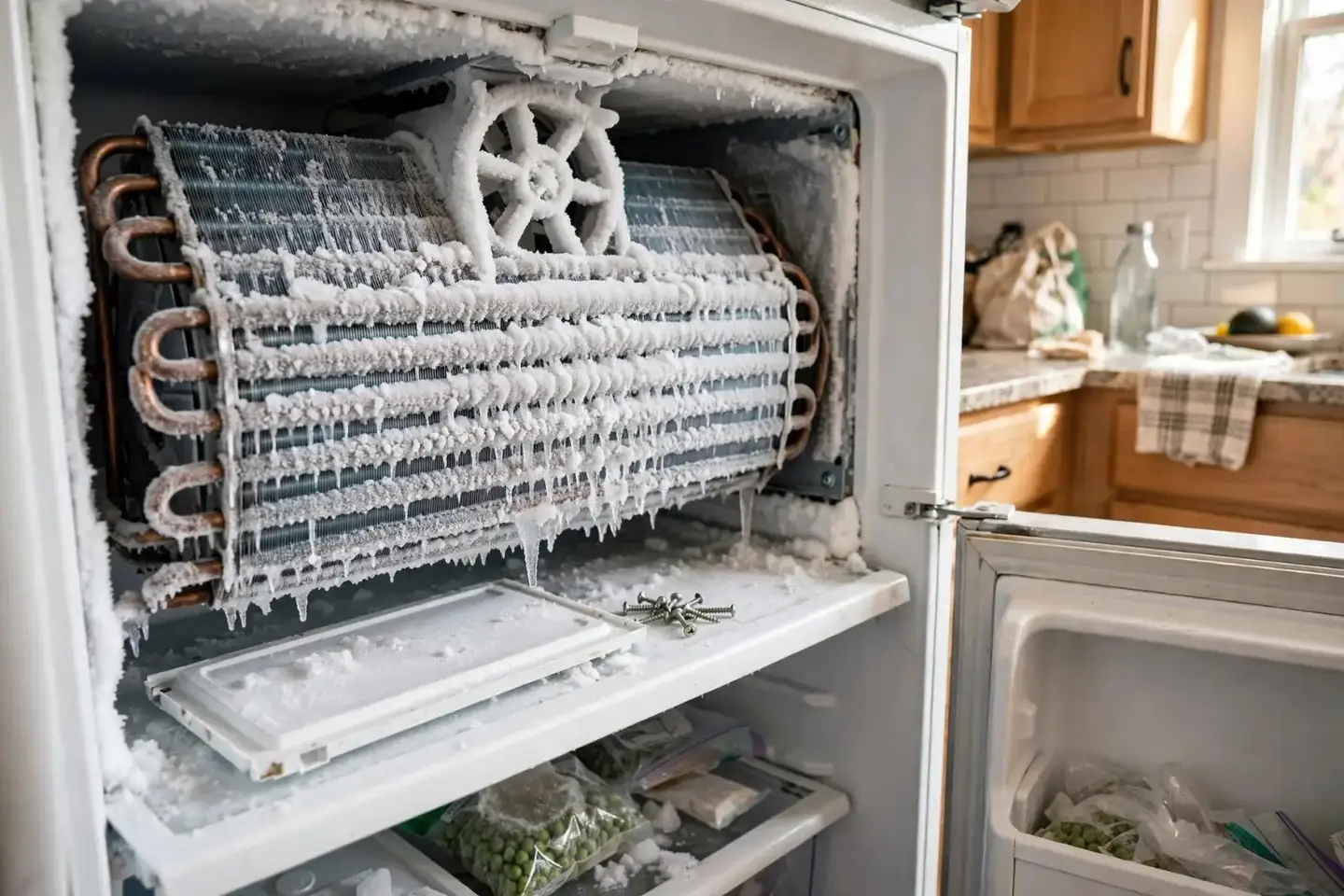
| Frost-free upright frosting inside | Defrost heater, sensor or timer failed | Defrost part replaced |
| Water under a chest freezer | Defrost drain plug left open or condensation on the walls | Drain closed, room ventilation improved |
| Struggles only in winter in the garage | Room below the unit's rated range | Move it indoors or choose a garage-ready model |
Parts most often replaced on freezers
- Thermostat or temperature control
- Sticks open or closed, so the unit never starts or never stops.
- Start relay and overload
- Clips onto the compressor. A clicking freezer that does not start often needs this small part.
- Door or lid gasket
- Stiffens and tears with age, letting moist air in and building frost.
- Defrost heater and sensor
- On frost-free uprights only. Same role and failure pattern as in a refrigerator.
What shapes a freezer repair
- Type
- Chest units have few parts but hidden coils; uprights are easier to open but have more to fail.
- Where it sits
- Tight basement stairs and crowded garages add time when a unit has to be moved.
- Refrigerant work
- Any leak repair requires a certified technician and much more time than an electrical fix.
Safe checks before booking
Check the outlet
Garage and basement outlets are often GFCI protected. A tripped GFCI elsewhere on the circuit can cut the freezer off silently.
Read a thermometer
Put an appliance thermometer between packages. The target is 0 °F or colder.
Inspect the lid or door seal
Look for tears, flattened spots and frost lines along the gasket, which show where warm air gets in.
Give it clearance
Chest freezers shed heat through their outer walls on many models. Boxes stacked against them trap it.
How urgent is a warm freezer?
- Act now
Food is thawing and the unit is full
Keep the lid shut, move the most valuable food to another freezer or a cooler with ice, and call today.
- This week
Freezer is cold but heavy frost keeps building
Defrost it and replace the gasket soon.
- Plan it
Sealed-system leak in a chest freezer wall
Usually replacement territory. Ask the technician for an honest comparison.
What happens on a freezer service call
Confirm the temperature
A thermometer reading inside the load confirms the complaint.
Electrical checks
Outlet voltage, the thermostat and the start components are tested before anyone looks at refrigerant.
Heat rejection
The condenser and its fan, where fitted, are checked for dust and airflow.
Sealed system test
If everything electrical passes, pressures or temperatures across the system point to a leak or a weak compressor.
Freezer Repair: common questions
How long does food stay frozen if my freezer stops?
The USDA says a full freezer holds temperature for about 48 hours with the lid closed, and a half-full one for about 24. Do not open it to check more than you have to.
Can I keep a freezer in an unheated garage?
Only if the manual says it is rated for the temperatures your garage reaches. Many units stop running properly below their minimum, because the thermostat senses cold room air and never calls for cooling.
Is it normal for a chest freezer to have frost?
A thin layer is normal on manual-defrost models. Frost thicker than about a quarter inch should be removed, and frost that builds quickly points to a seal problem.
Should I repair or replace an old chest freezer?
Electrical parts like the thermostat and relay are simple to replace and worth doing. A refrigerant leak inside the cabinet walls is usually not worth repairing.
Talk to a technician about freezer repair
Call to be connected with an independent appliance repair technician near you.
(800) 555-0199Calls answered 24 hours a day, 7 days a week
Fixwell Appliance Repair is a referral service. Your call goes to an independent appliance repair technician who sets their own schedule. Ask about insurance and the repair warranty before work starts. How this works
Call now · 24/7
Talk to a technician by phone
Call Now (800) 555-0199Have this ready when you call
- Your ZIP code
- The appliance, brand and model number
- What is happening, any error code, and whether water or gas is involved
Gas smell, smoke or flames: leave and call 911 or the gas utility first.