
Laundry airflow and safety
Dryer vent cleaning
Lint that gets past the screen collects in the vent duct. As it builds up, drying takes longer, the dryer runs hotter and safety parts start to fail. Cleaning the whole run, from the dryer to the outside hood, restores airflow and lowers the fire risk.
Calls answered 24 hours a day, 7 days a week. Calls are routed to an independent appliance repair technician. Reviewed .
Signs the vent needs cleaning
| What you notice | Usual cause | Usual fix |
|---|---|---|
| Loads take more than one cycle | Restricted airflow | Full vent cleaning |
| Laundry room hot and humid | Moist air escaping or not leaving | Vent and connection checked |
| Outside hood flap barely opens | Lint or a nest at the hood | Hood cleared or replaced |
| Burning smell when running | Lint near the heat source | Stop using; clean vent and cabinet |
| Thermal fuse has blown before | Overheating from airflow loss | Vent cleaned before the fuse is replaced |
Quick checks at home
Feel the airflow
With the dryer running, airflow at the outside hood should be strong.
Look at the hood
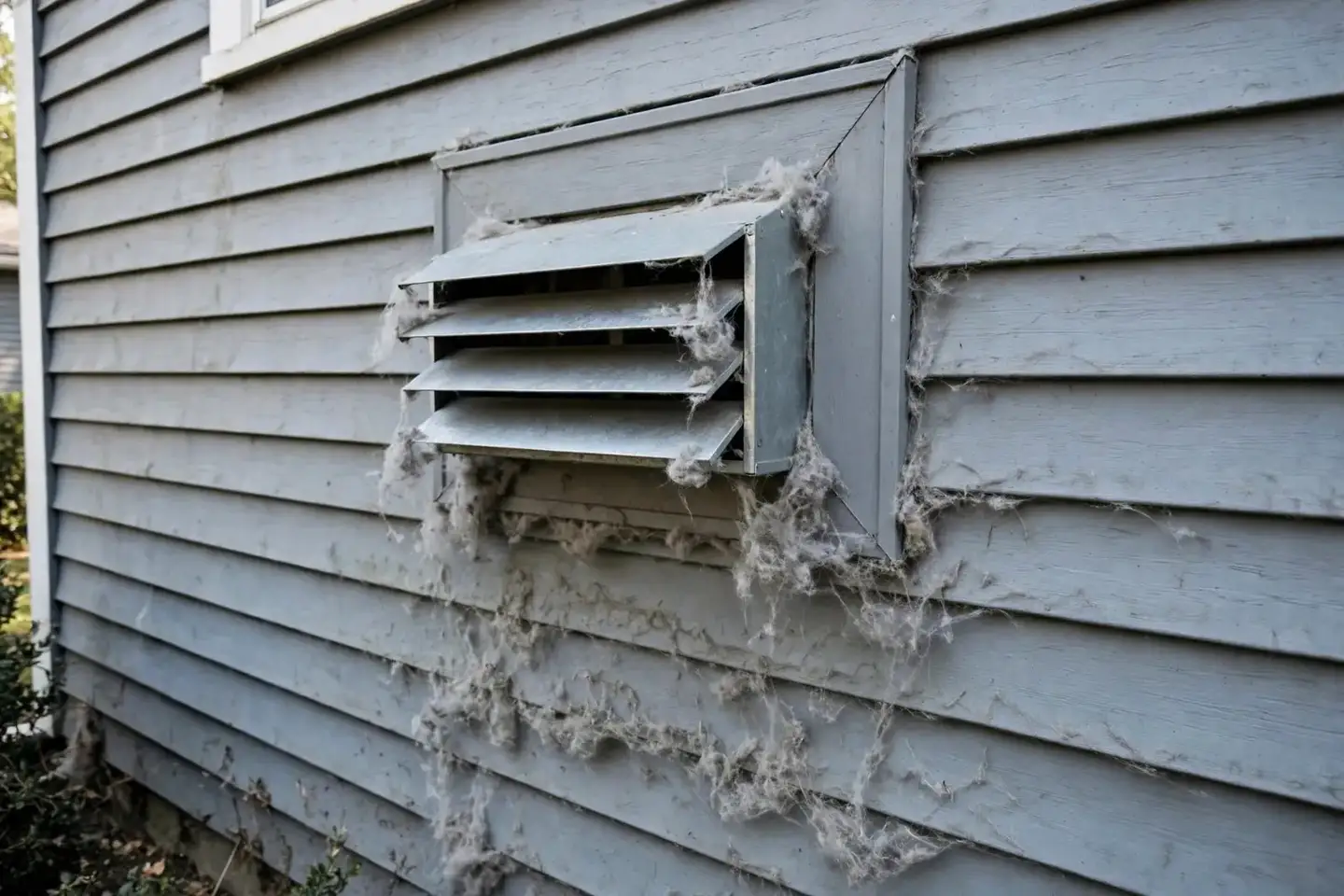
Lint around the flap is a clear sign of buildup inside.
Check the duct length
Long runs with several bends, or vents through the roof, clog faster.
When to book
- Act now
Burning smell or a very hot dryer cabinet
Stop using the dryer until it is cleaned and inspected.
- This week
Drying takes noticeably longer than it used to
Book a cleaning.
- Plan it
No problems, but the vent has not been cleaned in years
Schedule a routine cleaning.
Parts sometimes replaced during cleaning
- Transition duct
- Foil or vinyl ducts swapped for semi-rigid metal.
- Exterior hood
- Broken flaps or hoods with bird guards that trap lint.
- Duct sections
- Crushed or disconnected rigid sections.
What changes the job
- Vent length and bends
- Long or complex runs take longer to clean.
- Roof vents
- Need roof access and are harder to clear.
- Condo and apartment vents
- Shared or long horizontal runs may require building management access.
What a vent cleaning includes
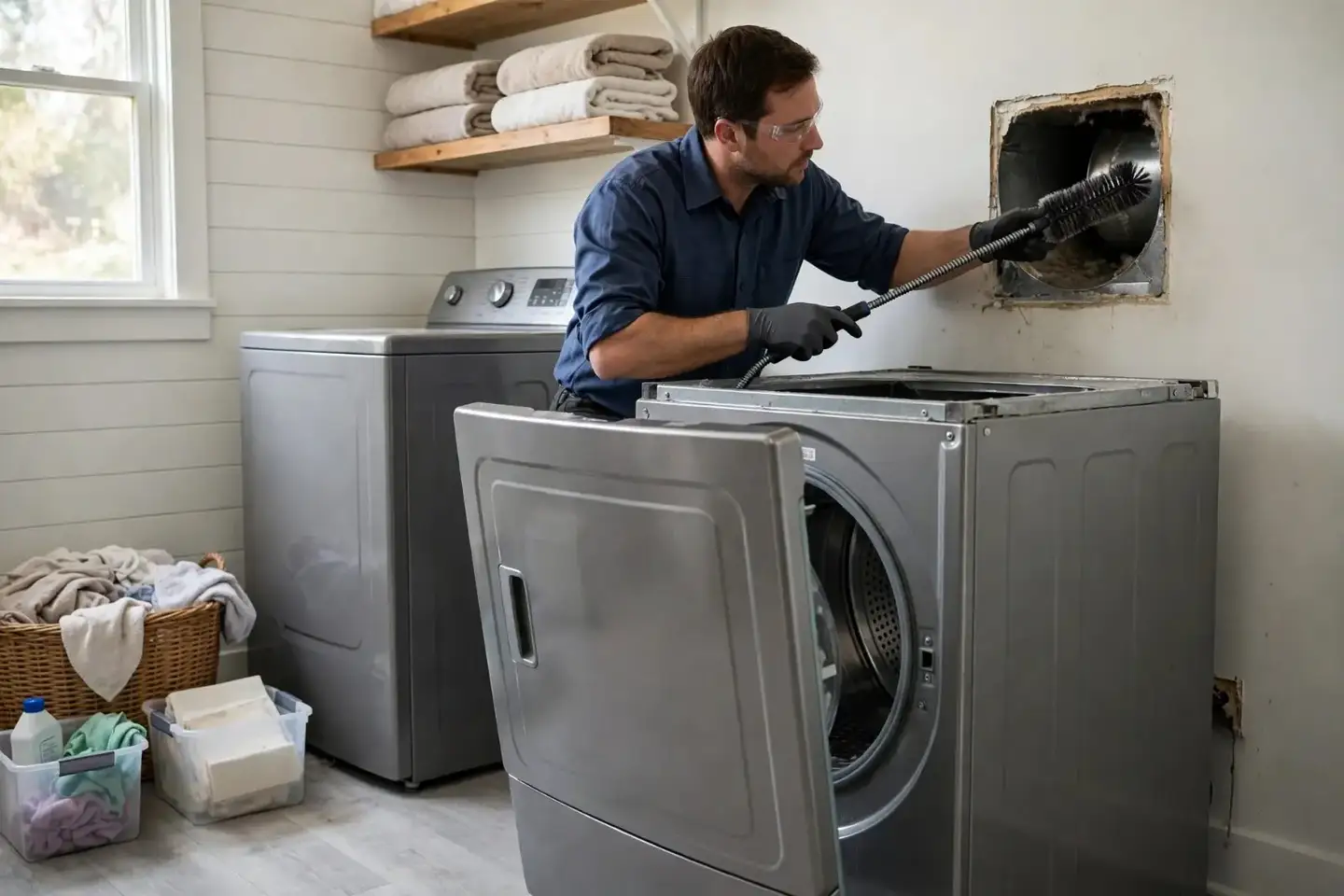
The dryer is pulled out and disconnected, the duct is brushed or air-whipped from one or both ends, lint is collected, and the hood flap is cleared. Damaged sections are replaced and airflow is checked when the dryer is reconnected.
- Transition duct
- The short flexible piece behind the dryer, often crushed or made of foil.
- Wall run
- The rigid duct inside the wall, floor or ceiling to the outside.
- Exterior hood
- The flap or louver outside, which clogs with lint and nests.
- Dryer interior
- Lint in the blower housing and under the drum, cleaned when the cabinet is open.
How the cleaning is done
Disconnect
Electric dryers are unplugged; gas dryers have the gas shut off at the appliance valve first.
Clean the run
Rotary brushes or air tools are fed through the duct.
Reconnect and test
The dryer is reconnected, gas connections leak tested, and airflow checked at the hood.
Dryer Vent Cleaning: common questions
How often should a dryer vent be cleaned?
The NFPA advises cleaning the vent and duct periodically and checking that the outdoor flap opens. Many households schedule it yearly, more often with heavy use or long runs.
Can I clean my own dryer vent?
A short, straight run can be cleaned with a vent brush kit. Long runs, roof vents and gas dryers are better left to a technician.
Does cleaning the vent save energy?
Better airflow means shorter cycles, so the dryer runs less per load.
Talk to a technician about dryer vent cleaning
Call to be connected with an independent appliance repair technician near you.
(800) 555-0199Calls answered 24 hours a day, 7 days a week
Fixwell Appliance Repair is a referral service. Your call goes to an independent appliance repair technician who sets their own schedule. Ask about insurance and the repair warranty before work starts. How this works
Call now · 24/7
Talk to a technician by phone
Call Now (800) 555-0199Have this ready when you call
- Your ZIP code
- The appliance, brand and model number
- What is happening, any error code, and whether water or gas is involved
Gas smell, smoke or flames: leave and call 911 or the gas utility first.