
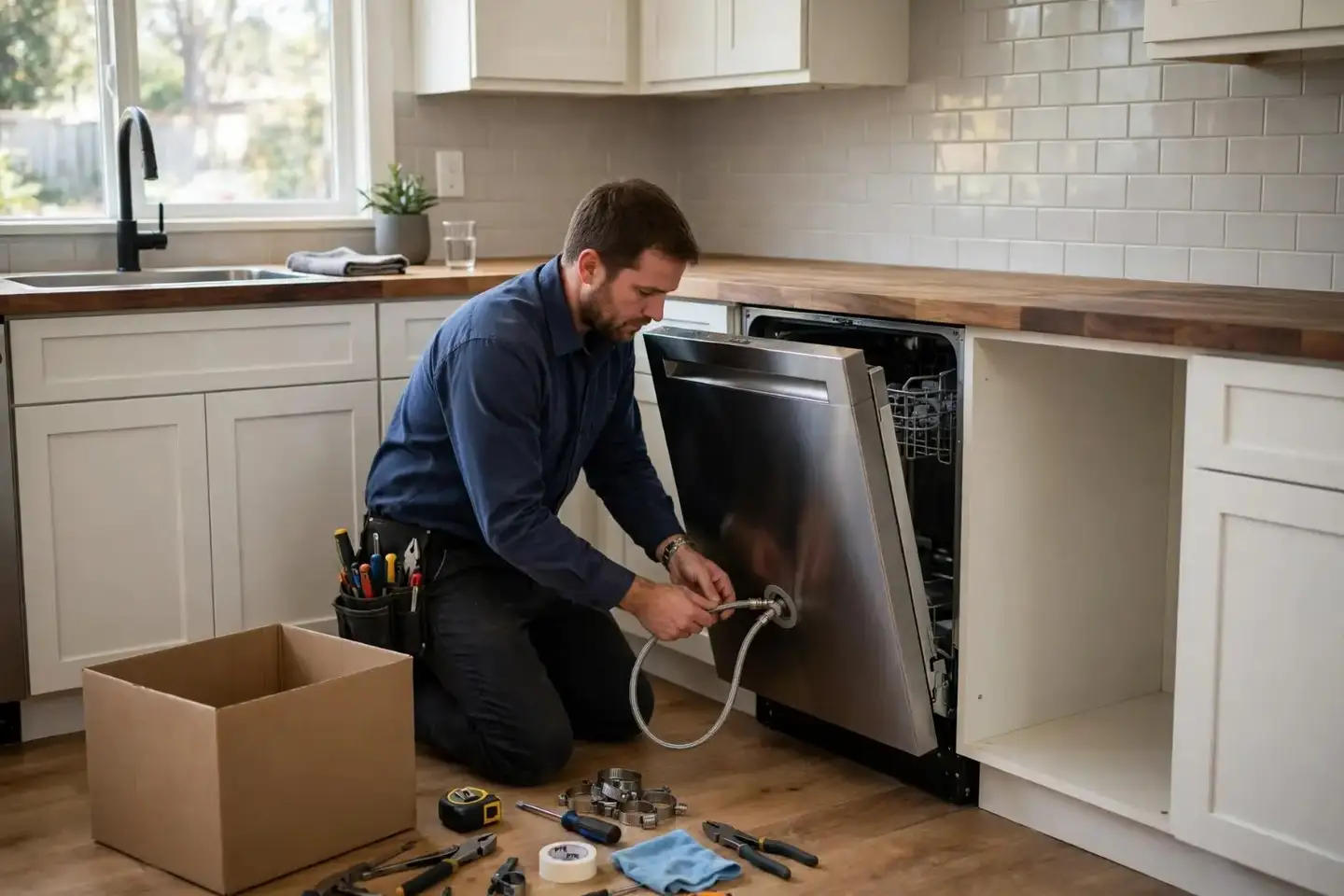
New and replacement appliances
Appliance installation
Many early appliance failures come from the installation: a kinked drain hose, a dryer vent crushed against the wall, a range without its anti-tip bracket. A careful installation connects water, drain, power, gas and venting the way the manual specifies.
Calls answered 24 hours a day, 7 days a week. Calls are routed to an independent appliance repair technician. Reviewed .
When installation needs another trade
- Plan it
No outlet or the wrong outlet for the appliance
An electrician adds or changes the circuit first.
- Plan it
New gas line needed
A licensed gas fitter or plumber runs it.
- This week
Old shutoff valves seized
Have them replaced before the swap.
How the installation runs
Remove the old unit
Disconnect and move it out.
Connect
New hoses, drain, power, gas and vent are connected to the manual's specifications.
Test
A full cycle is run and connections are checked for leaks.
What changes installation
- Like for like
- A straight swap is quickest.
- Cabinet changes
- Openings that need trimming take longer.
- Utility changes
- Gas or electrical changes may require permits under local rules.
Installation faults that cause later problems
| What you notice | Usual cause | Usual fix |
|---|---|---|
| Dishwasher drains poorly | No high loop or air gap; disposal knockout plug in place | Drain rerouted; plug removed |
| Range tips when the door is loaded | Anti-tip bracket missing | Bracket fitted |
| Dryer slow from day one | Crushed transition duct | Duct replaced and routed |
| Washer walks across the floor | Feet not leveled or shipping bolts left in | Bolts removed, feet leveled |
| Fridge water leak | Loose compression fitting | Fitting remade |
What installation covers
Positioning, leveling and securing the appliance, connecting supply lines, drains, power and venting, and running it to check for leaks. Gas connections and new electrical circuits may need a licensed gas fitter, plumber or electrician depending on local rules.
- Dishwashers
- Supply, drain with a high loop or air gap, power and mounting brackets.
- Ranges
- Power or gas connection and the anti-tip bracket.
- Microwaves
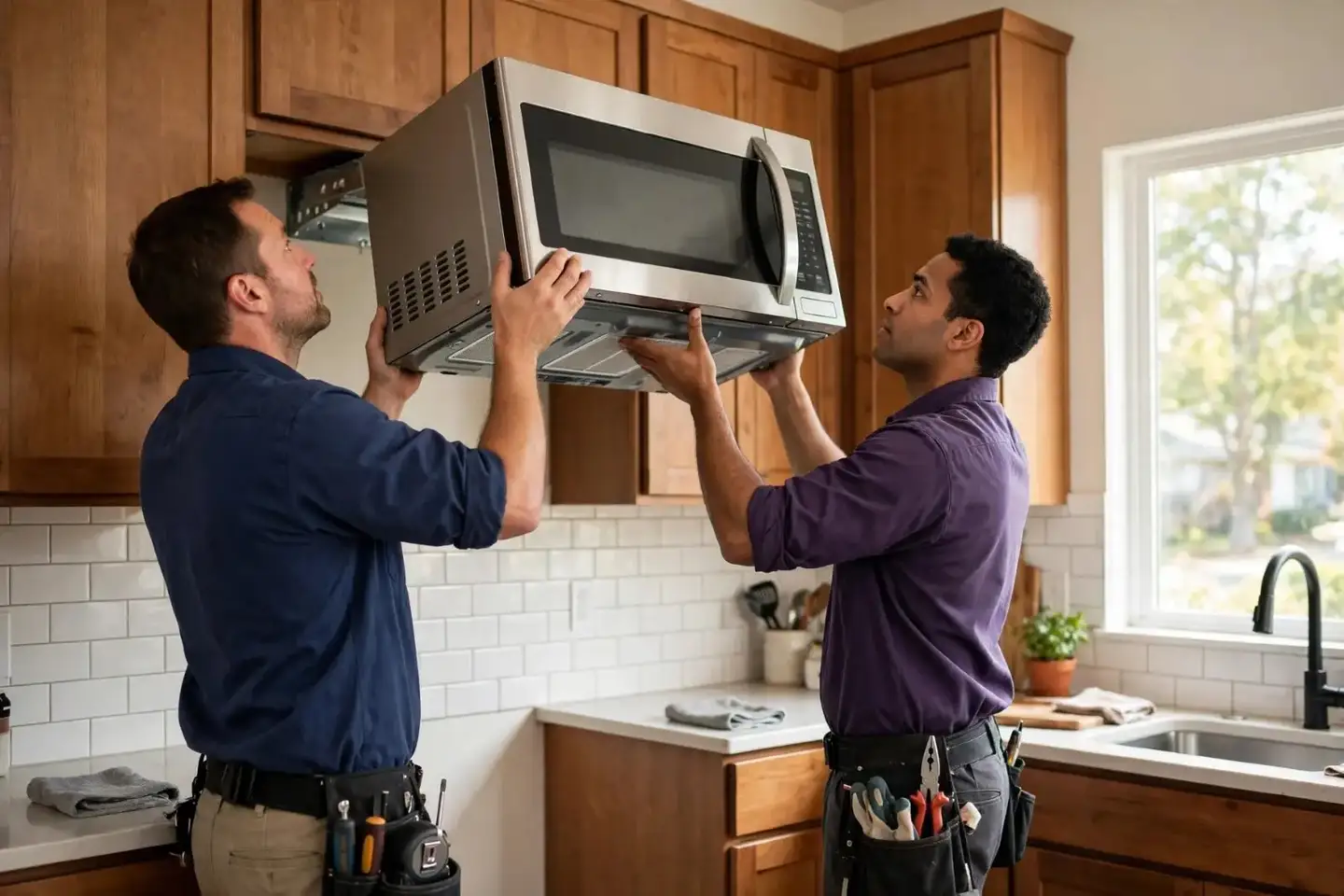
- Wall bracket, top cabinet mount and venting.
- Laundry
- Hoses, drain, dryer vent and, for gas dryers, the gas connection.
Before the installer arrives
Measure the opening
Width, height and depth, including door swing and handles.
Check connections
Outlet type, gas valve, water valve and vent location.
Clear the path
Doorways and stairs wide enough for the appliance.
Installation parts worth replacing
- Supply hoses
- New braided hoses rather than reusing old ones.
- Dryer transition duct
- Semi-rigid metal.
- Power cords
- Dryers and ranges are often sold without one; it must match the outlet.
Appliance Installation: common questions
Do I need a permit to install an appliance?
A like-for-like swap usually does not. New gas lines and new circuits often do. Check with your local building department.
Why does a range need an anti-tip bracket?
Manufacturers require it and the CPSC warns that ranges can tip forward onto children who climb on open doors.
Can you install an appliance I bought online?
Yes. Have the model number ready so the installer can check the connections needed.
Should old hoses and connectors be reused?
Most manufacturers say no. New appliances usually call for new supply hoses, and flexible gas connectors should not be reused after being disconnected and bent. Fresh parts are the best protection against leaks.
Will the installer remove my old appliance?
Many installers can haul away the old unit, but it is not universal. Ask when you book, and check whether your utility or city offers appliance recycling programs.
Talk to a technician about appliance installation
Call to be connected with an independent appliance repair technician near you.
(800) 555-0199Calls answered 24 hours a day, 7 days a week
Fixwell Appliance Repair is a referral service. Your call goes to an independent appliance repair technician who sets their own schedule. Ask about insurance and the repair warranty before work starts. How this works
Call now · 24/7
Talk to a technician by phone
Call Now (800) 555-0199Have this ready when you call
- Your ZIP code
- The appliance, brand and model number
- What is happening, any error code, and whether water or gas is involved
Gas smell, smoke or flames: leave and call 911 or the gas utility first.